
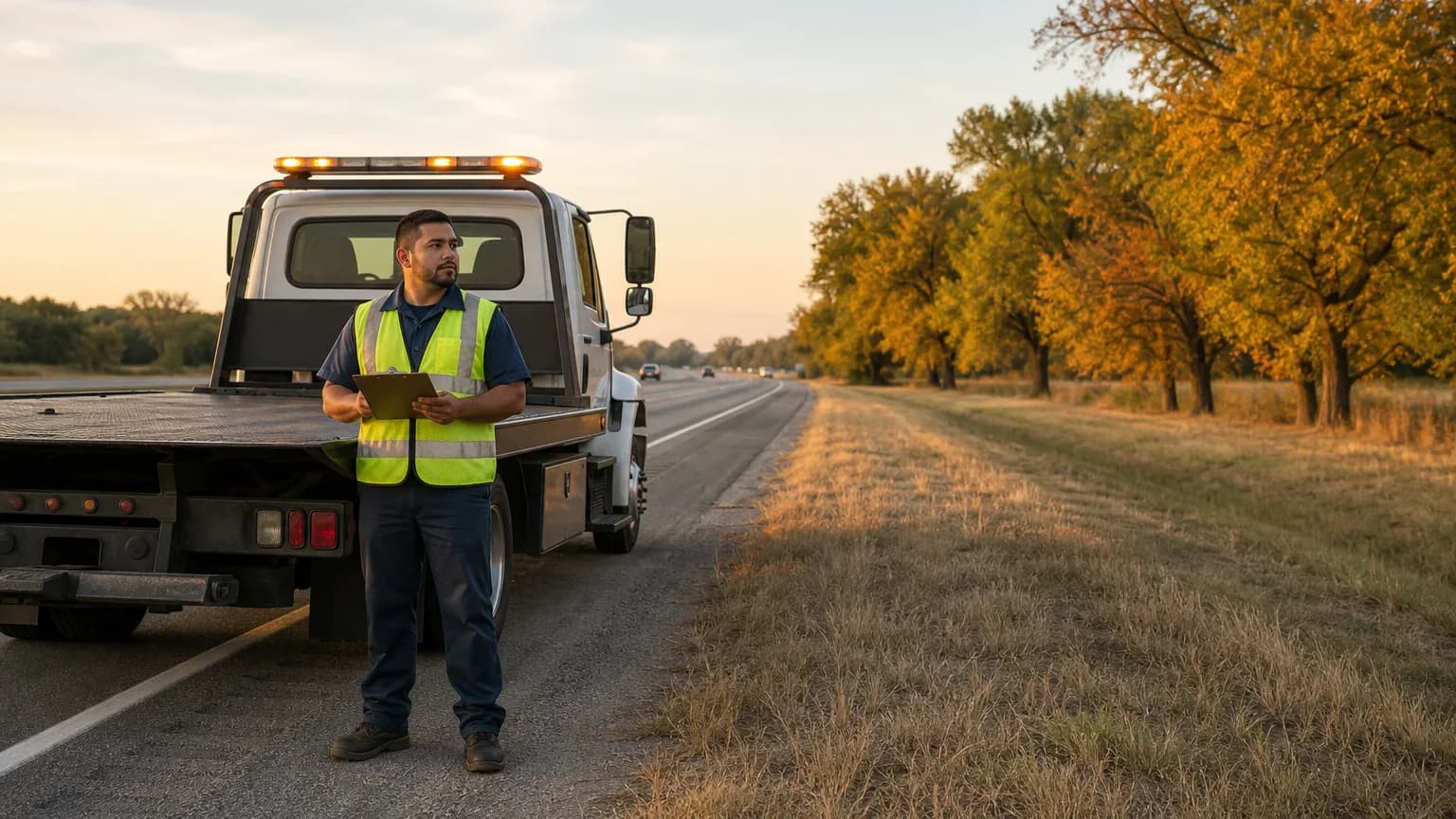
Fall car maintenance Dallas drivers put off is the maintenance that catches them on the first chilly morning in October. Dallas does not have a long, gentle autumn. One week the highs are still in the 90s, and a few days later a cold front drops mornings into the 40s or lower, with heavy rain on the way in. Everything your car survived over the summer gets tested at once.
Texas Tows Inc. has served Dallas-area drivers since 2015 under TDLR VSF license #0654316VSF. Our drivers see the same pattern every year: tow calls for dead batteries, flat tires, and brake trouble climb right after the weather changes. Most of those breakdowns were preventable with an hour of attention beforehand.
The Fall Car Maintenance Dallas Checklist to Finish Before November
You do not need a full shop visit for most of this list. Work through it in order of what is most likely to strand you:
- Have the battery load-tested and the terminals cleaned.
- Check tire pressure cold, and inspect tread depth and sidewalls.
- Replace wiper blades and top off washer fluid.
- Test brakes, headlights, brake lights, and turn signals.
- Check coolant level and condition, and confirm the heater and defroster work.
- Pack an emergency kit for the road.
If you did your seasonal check in the spring, our spring car maintenance checklist for Dallas drivers covers what to compare against.
Battery: Where Summer Damage Shows Up
Dallas summers are hard on batteries. Heat speeds up internal wear, and the damage often stays hidden until cold weather asks the battery for more starting power. Most car batteries last roughly three to five years, and one that has worked through a few Texas summers is a good candidate for a fall test. Many auto parts stores and repair shops will test a battery for free.
Look at the terminals for white or blue-green corrosion, check that the cables are tight, and pay attention to slow, labored cranking. Those are the warning signs. Our post on why Dallas summer heat kills car batteries explains the wear pattern in more detail.
If the battery does leave you stranded, do not keep cranking the engine. Call for a tow to your home or repair shop instead of risking further electrical damage, and read what to do in our dead battery guide for Dallas drivers.
Tires: Pressure Drops When the Temperature Does
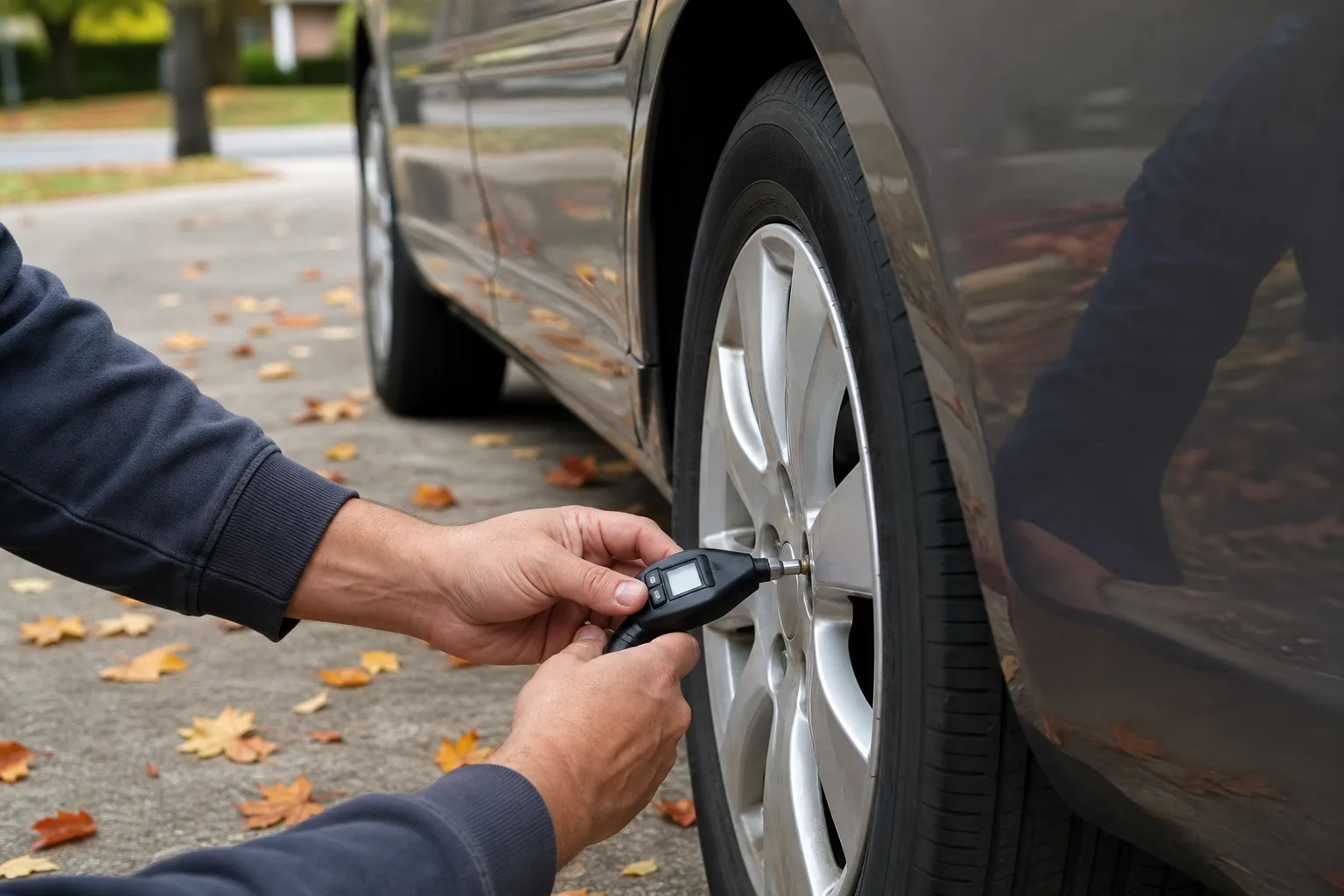
Tire pressure falls roughly 1 psi for every 10 degrees Fahrenheit of temperature drop. A tire that was properly inflated during a 95-degree afternoon can be noticeably low after a 45-degree morning. The National Highway Traffic Safety Administration recommends checking pressure at least once a month, with the tires cold, and using the figure on the driver's door jamb placard.
While you are there, check tread depth and look for cracking or bulging on the sidewalls. Summer road temperatures on I-35E and the LBJ Freeway are hard on rubber, and worn tires handle wet pavement poorly. If you regularly drive at highway speed, our guide to preventing tire blowouts on Dallas highways is worth a read.
Brakes, Wipers, and Lights
Fall shortens the days and brings rain. Three items matter more than drivers expect:
- Wiper blades: Sun-baked rubber cracks and streaks. Replace blades that chatter or smear, and refill the washer fluid.
- Brakes: Grinding, squealing, a soft pedal, or a vehicle that pulls to one side under braking should be inspected before the roads get slick. Wet leaves on the pavement lengthen stopping distances.
- Lights: With darkness arriving earlier once clocks fall back in early November, confirm that headlights, brake lights, and turn signals all work. A quick walk-around with a helper takes five minutes.
Also check coolant level and condition, and make sure the heater and defroster actually work. A defroster that fails on a cold, rainy morning is a safety problem, not an inconvenience.
What Fall Driving in DFW Looks Like
Fall is one of the busiest driving seasons in North Texas. High school football Friday nights, Cowboys game days at AT&T Stadium in Arlington, and the State Fair of Texas at Fair Park all push traffic onto I-30, I-35E, Central Expressway, and the Dallas North Tollway. Stop-and-go congestion is hard on brakes and cooling systems, and a breakdown in a packed lane is more dangerous than one on a quiet street.
Fall rain also arrives fast. A storm can flood low underpasses in minutes, so never drive through standing water of unknown depth. Our guide to towing during Dallas flash flooding explains what to do if water stalls your car.
Build a Simple Emergency Kit
Keep these items in the trunk from October through March:
- A charged phone power bank and a car charger cable
- A flashlight with fresh batteries
- Reflective triangles or road flares
- A blanket, water, and a few snacks
- A tire pressure gauge and a small first-aid kit
- Your insurance card and registration in an easy-to-reach spot
If You Break Down Anyway
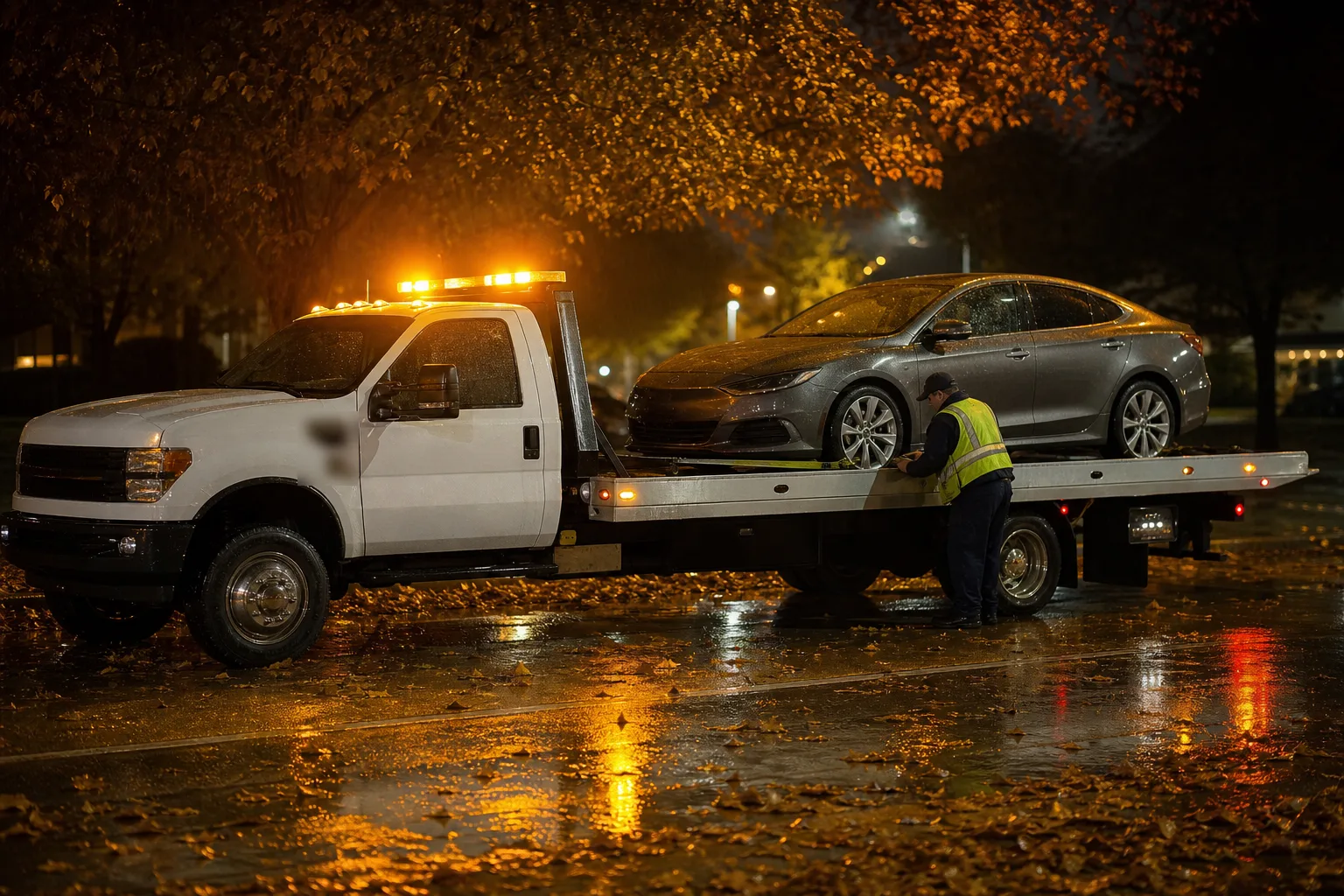
Even a well-maintained car can fail. If it happens, turn on your hazard lights right away and steer to the shoulder or a safe parking spot. Stay in the vehicle with your seat belt fastened if you are on a highway shoulder, and call for help. If there is smoke, a fuel smell, or any injury, call 911 first.
Tell dispatch your location, your cross street or nearest exit, and what the vehicle is doing. Texas Tows offers 24/7 towing service across Dallas and DFW. If your car is low-clearance, all-wheel-drive, or otherwise unsafe to drag, ask for flatbed towing so all four wheels stay off the pavement. For lockouts and other situations that may not need a tow, our roadside assistance page lists what we handle.
FAQs About Fall Car Maintenance in Dallas
When should Dallas drivers start fall car maintenance?
Start in September or October, before the first cold front arrives. Dallas can swing from 90-degree afternoons to near-freezing mornings within days, and a battery or tire that coped with summer heat can fail the first time temperatures drop.
Why do car batteries die in the first cold snap after a Dallas summer?
Months of extreme heat wear down a battery's internal components, and cold weather then asks that weakened battery to deliver more starting power. Having it load-tested in the fall catches a failing battery before it strands you.
How often should I check my tire pressure in the fall?
Check it at least once a month and after any big temperature drop, when the tires are cold. Pressure falls roughly 1 psi for every 10 degrees Fahrenheit the temperature drops. Use the number on the driver's door jamb placard, not the number molded into the tire sidewall.
What should I do if my car won't start on a cold Dallas morning?
Turn off accessories, try once more, and if it still won't start, stop cranking so you don't drain what is left. Move to a safe spot if you can and call for help. Texas Tows can tow the vehicle to your home or a repair shop of your choice, 24 hours a day.
Does Texas Tows tow vehicles after a fall rainstorm breakdown?
Yes. Texas Tows tows disabled vehicles across Dallas and DFW around the clock, including during heavy rain. Flatbed towing is available for cars, SUVs, and other passenger vehicles that cannot be driven safely.
Stranded This Fall? Call Texas Tows 24/7
Finishing your fall car maintenance Dallas checklist early is the best way to avoid a roadside emergency. If a breakdown still happens, Texas Tows dispatches around the clock, day or night, in dry weather or heavy rain.
Call (817) 512-1024 for a tow anywhere in Dallas and DFW. Have your location, vehicle details, and any dashboard warnings ready, and we will send the right equipment.
