
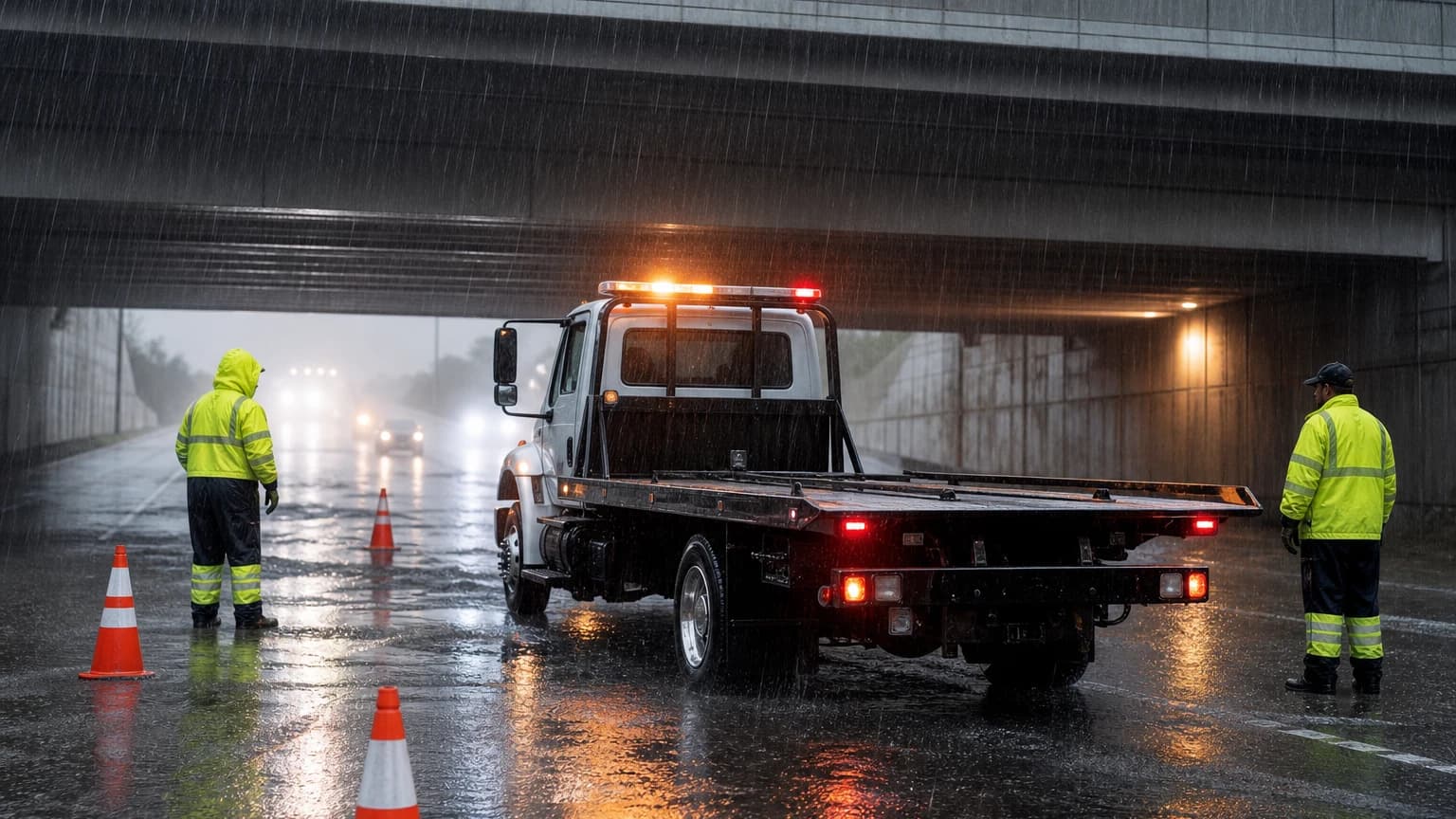
Late-summer storms in Dallas-Fort Worth can drop several inches of rain in under an hour, turning familiar underpasses and low-water crossings into serious hazards within minutes. When that happens, flash flood towing in Dallas becomes the safest way to get a stalled vehicle out of rising water without further damage or personal risk. Knowing what to do in the first few minutes, before help arrives, can protect both you and your vehicle.
Texas Tows Inc. has served Dallas-Fort Worth drivers since 2015 and keeps trucks staged and ready when severe weather is forecast. Our TDLR-licensed operators know how to recover vehicles from standing water, using winches and flatbed equipment instead of attempting a drive-out that could stall the engine further or strand the vehicle in deeper water.
What to Do the Moment Your Car Stalls in Floodwater
The first few minutes matter most. If your vehicle stalls in standing water on a Dallas street or highway, follow these steps in order:
- Do not try to restart the engine. If water has reached the engine bay, restarting can pull water into the cylinders and cause damage that a simple tow would have avoided.
- Turn on your hazard lights. This alerts other drivers that your vehicle is stopped, which matters even more with reduced visibility during heavy rain.
- Stay inside if the water is not rising toward the doors. A stalled car protects you better than the surrounding current does. Exit only if the water keeps rising or the vehicle begins to float or shift.
- If you must exit, move to higher ground immediately. Never walk or drive through moving water if you can avoid it. Even shallow, fast-moving runoff can knock an adult off their feet.
- Call for help and share your exact location. A cross street, highway exit, or nearby landmark helps dispatch send the right recovery equipment.
Once you are safe, call Texas Tows roadside assistance to arrange recovery. Do not attempt to push, rock, or restart a flooded vehicle while waiting. Our guide to emergency roadside assistance in Texas covers other severe-weather situations, from hail to sudden ice, that can strand drivers across the state.
Flash Flood Towing in Dallas: When You Need a Winch-Out or a Tow
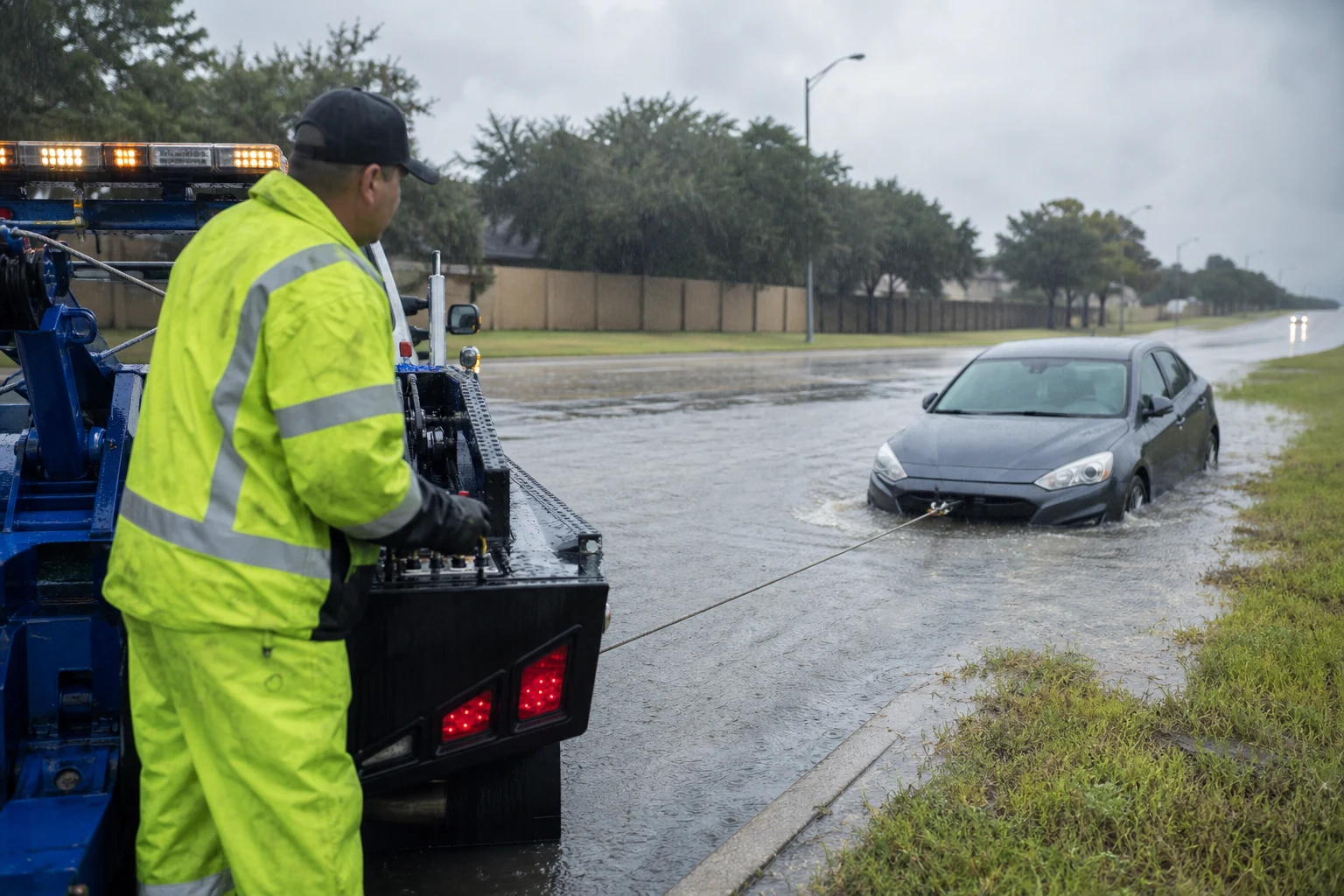
Not every flooded vehicle needs the same response. A car resting in a few inches of standing water on a level street may only need a careful tow once the water recedes enough for safe access. A vehicle pushed against a curb, partially submerged in a low-water crossing, or stuck against debris usually needs a winch-out to pull it free without causing additional damage to the frame or undercarriage.
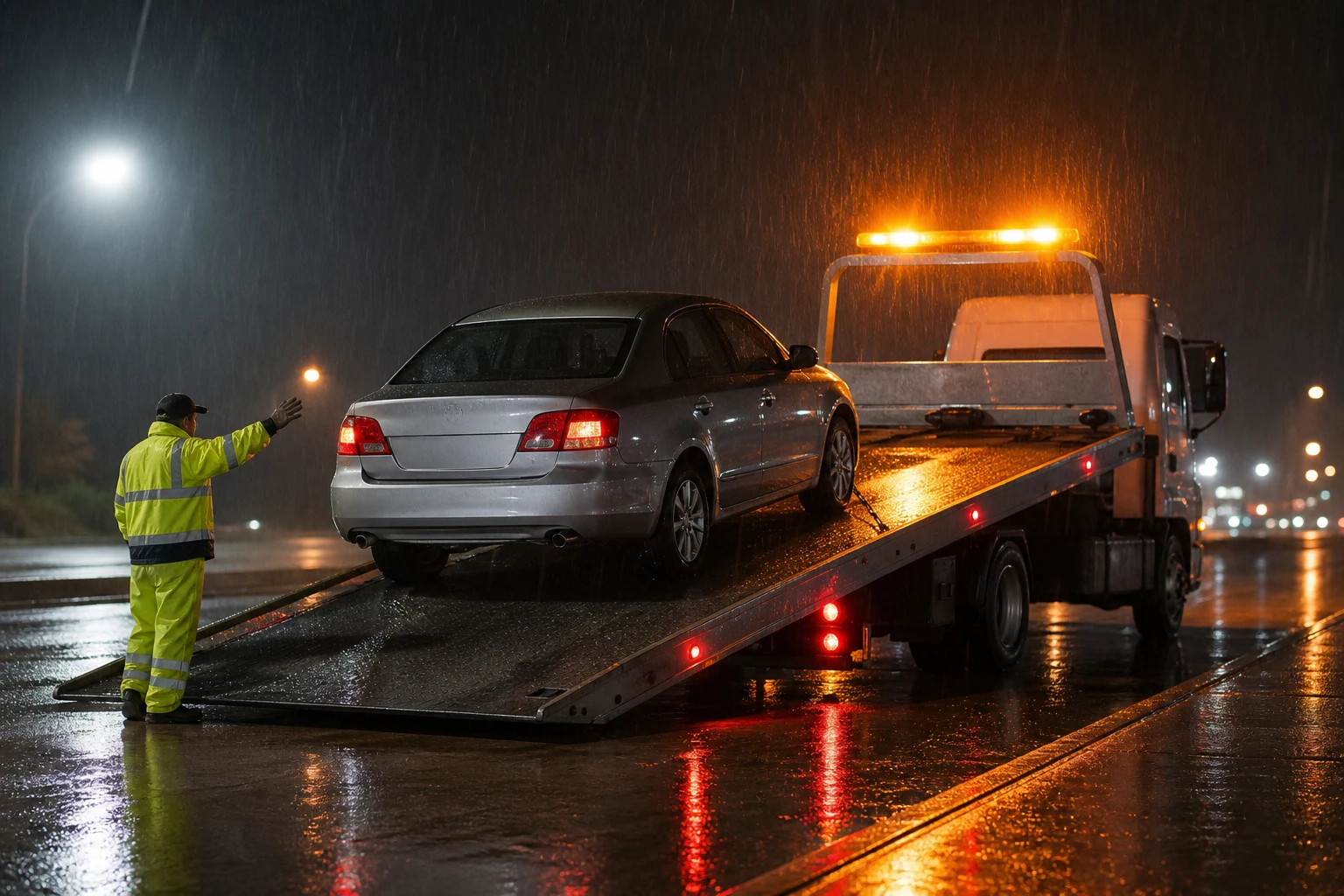
Our drivers assess water depth, current, and vehicle position before committing to a recovery method, and they wait for standing water to drop to a safe level before entering it. If our drivers cannot safely reach the vehicle yet, they stage nearby and monitor conditions until it is safe to proceed. We provide full towing service once the vehicle is recovered, including flatbed transport for vehicles that should not be driven after sitting in floodwater.
DFW Areas That Flood Fastest During Heavy Storms
Dallas-Fort Worth's mix of low-lying underpasses, urban creeks, and flat terrain means some locations flood faster and deeper than others during a heavy downpour. Underpasses along I-30, I-35E, and I-635 (LBJ Freeway) have a long history of ponding during intense rain, since the roadway sits below the surrounding grade and heavy rain can overwhelm storm drains in minutes. Low-water crossings near White Rock Creek and stretches of the Trinity River corridor are also prone to rapid rises that can catch drivers off guard even after the rain itself has slowed.
The National Weather Service's Turn Around, Don't Drown campaign notes that just 12 inches of moving water can float most passenger cars, and 18-24 inches can carry away larger SUVs and trucks. Water depth is almost impossible to judge at night or in murky runoff, which is why the campaign's advice holds even on a familiar street: turn around and find another route.
Reducing Your Risk Before the Next DFW Storm
A few precautions cut your risk when Dallas-Fort Worth gets hit with sudden heavy rain, which is common from late summer into fall as tropical moisture moves up from the Gulf.
- Check the forecast before you drive. If flash flood warnings are active for your route, delay the trip or plan an alternate path that avoids known low-water crossings.
- Never drive around barricades. The City of Dallas and surrounding municipalities close low-water crossings and flood-prone underpasses for a reason, even if the water looks shallow from a distance.
- Keep your phone charged and reachable. A dead phone during a storm delays dispatch and makes it harder to share your exact location.
- Save Texas Tows in your contacts. You will not be searching for a number while water rises around your car.
What to Expect When You Call Texas Tows During a Storm
Severe weather increases call volume across DFW, so dispatch asks for details that speed up an already urgent response: your exact location, whether the vehicle is still in water or already on dry ground, whether anyone is inside, and any visible hazards nearby like downed power lines or fast-moving current.
Our operators prioritize calls where people remain in or near rising water and coordinate with local authorities when a situation requires it. Once it is safe to proceed, the technician evaluates the vehicle, chooses the right recovery method, and documents the service. Texas Tows operates under TDLR VSF license #0654316VSF and has served Dallas-Fort Worth drivers since 2015, including during the region's worst weather.
FAQs About Flash Flood Towing in Dallas
What should I do if my car stalls in floodwater in Dallas?
Turn on your hazard lights, stay inside if the water is not rising toward the doors, and call for help instead of trying to restart the engine. Restarting a flooded engine can cause serious internal damage. If water is rising quickly, leave the vehicle and move to higher ground immediately.
Does Texas Tows provide flash flood towing in Dallas?
Yes. We provide 24/7 flash flood towing, winch-outs, and roadside response throughout Dallas-Fort Worth during severe weather, including vehicles stalled in standing water on roadways, underpasses, and low-water crossings.
Is it ever safe to drive through a flooded underpass in Dallas?
No. The National Weather Service warns that just 12 inches of moving water can float most cars, and 18-24 inches can carry away trucks and SUVs. Depth is nearly impossible to judge in the dark or in murky runoff, so the safest choice is always to turn around and find another route.
Will insurance cover a flood-damaged vehicle and its tow in Dallas?
Comprehensive auto insurance typically covers flood damage and the associated tow, but liability-only policies usually do not. Check your policy or ask your agent before a storm hits, and keep your insurance information in the vehicle.
Do you offer a discount for military, teachers, or first responders?
Yes. Active duty military, veterans, teachers, and first responders receive 15% off all services, including flash flood towing calls. Mention your status when you call.
Need Flash Flood Towing Now? Call Texas Tows 24/7
A car stalled in rising water is not something to wait out. Texas Tows provides flash flood towing, winch-outs, and roadside response throughout Dallas-Fort Worth, day or night, whenever severe weather hits.
Call (817) 512-1024 for flash flood towing in Dallas. Share your exact location, whether the vehicle is still in water, and whether anyone needs immediate assistance, and we will dispatch the right recovery equipment as soon as it is safe to reach you.
