
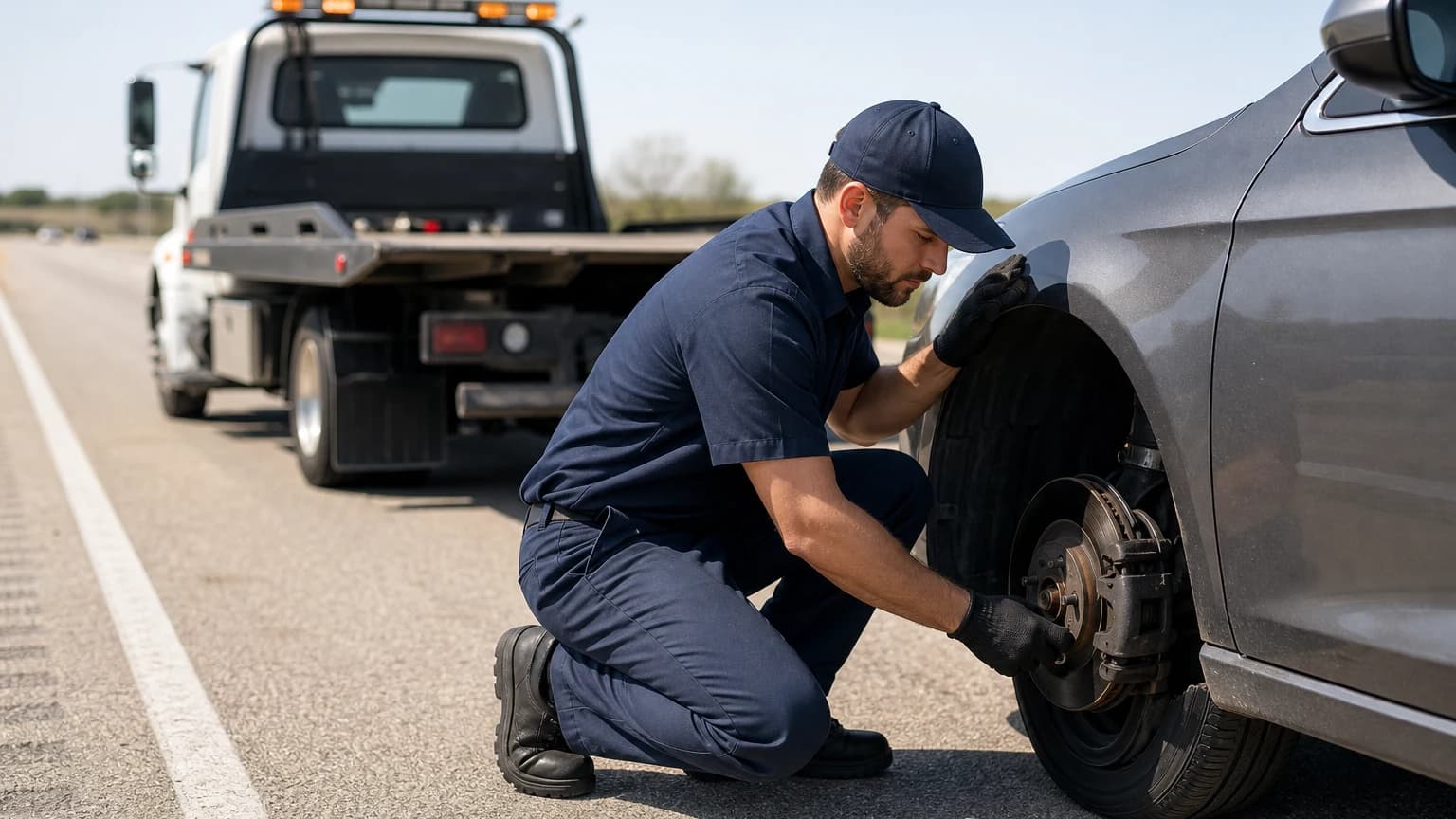
Brake wear in Dallas traffic is one of the most common reasons our drivers get called out across Dallas-Fort Worth, and it's rarely a surprise once you know what to listen and feel for. Between the daily grind on LBJ Freeway, Central Expressway, and I-35E, and the way North Texas summer heat keeps rotors and pads hot for hours at a time, brakes here take a beating most drivers don't fully account for until something starts squealing, grinding, or feeling different underfoot.
Texas Tows Inc. has served Dallas-Fort Worth drivers since 2015 under TDLR VSF license #0654316VSF, and brake-related calls climb every summer as commutes turn into stop-and-go crawls on the metro's busiest highways. Knowing the difference between a normal wear warning and a real emergency can save you a repair bill, or worse, a breakdown in traffic.
Why Brake Wear in Dallas Traffic Happens Faster Than You'd Expect
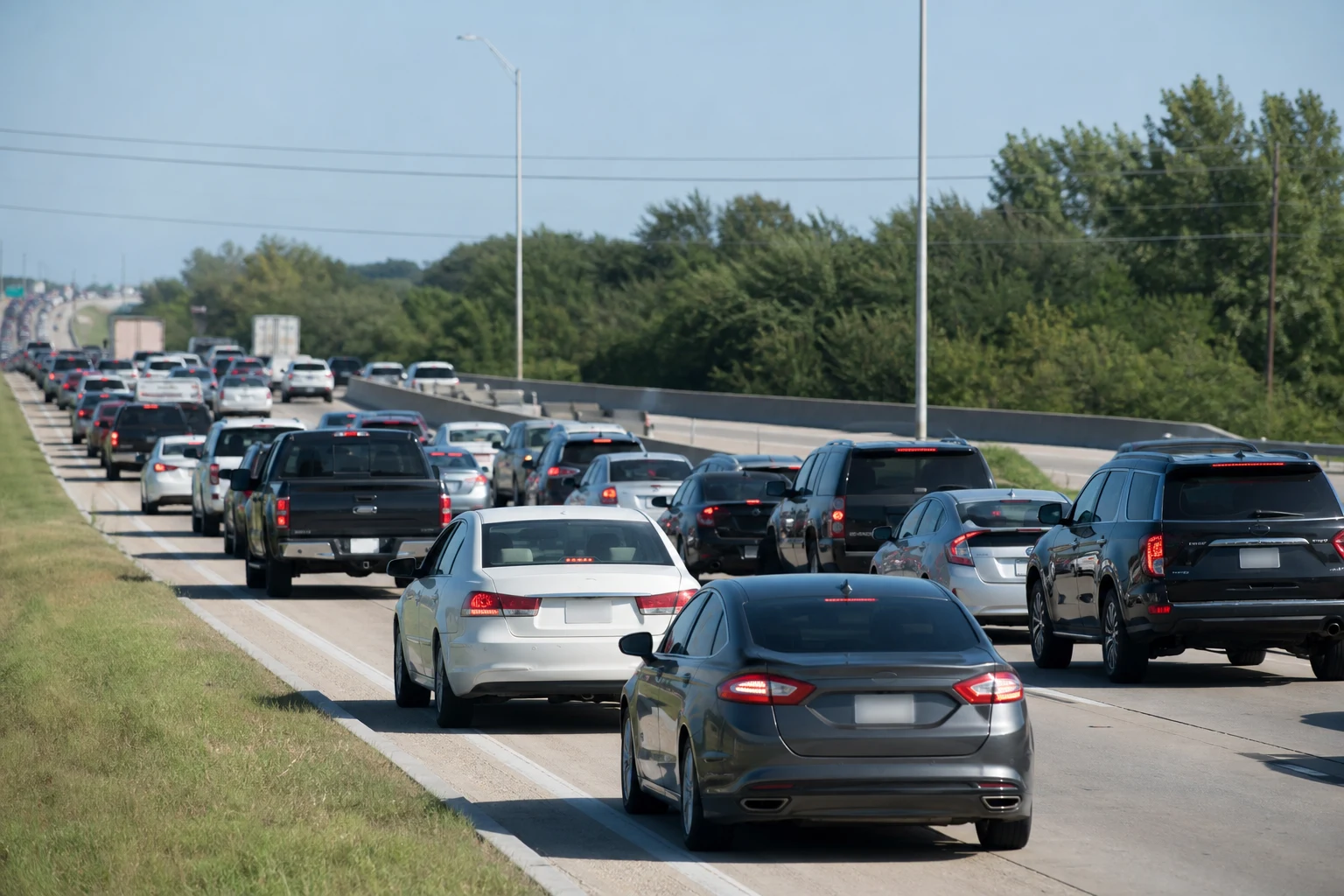
Brake pads wear down every time you press the pedal, but how fast they wear depends heavily on driving conditions. Highway cruising with long, gradual stops is gentle on pads. Dallas-area rush hour is the opposite: bumper-to-bumper crawls on I-635, US-75, and the Dallas North Tollway mean hundreds of short, hard stops in a single commute, and each one grinds a little more material off the pads.
Heat compounds the problem. Once summer temperatures push pavement well past 100°F, brake components stay hot between stops instead of cooling off the way they would in milder weather. Hot pads wear faster, and extended heat exposure can also affect brake fluid over time. Drivers who commute through the same stop-and-go stretches every day, whether it's the Stemmons corridor or the mixmaster interchanges downtown, tend to see brake wear show up months sooner than drivers who spend more time on open highway.
Warning Signs Worth Paying Attention To
Your brakes usually tell you they're wearing out before anything fails outright. Catching these signs early is the difference between a routine pad replacement and a much bigger repair.
- A light, high-pitched squeal that shows up when braking and fades once you let off the pedal. This is often a built-in wear indicator doing exactly what it's designed to do — warning you that pads are getting thin.
- A grinding or metallic scraping sound under braking. This usually means the pad material has worn through and metal is now contacting metal, which reduces stopping power and damages the rotor with every stop.
- Pulsing or vibration through the pedal when you brake, which often points to a warped rotor from repeated heat cycling in stop-and-go traffic.
- The car pulling to one side when you brake, which can mean uneven pad wear or a caliper that isn't releasing properly.
- A soft, spongy, or sinking pedal — one that needs more travel than usual to get the same stopping power, or that sinks slowly toward the floor when held. This is the most serious sign and often points to a fluid leak or air in the lines.
Is It Safe to Drive, or Time to Call for a Tow?
Not every warning sign means you need to stop driving immediately, but some do. A light squeal that comes and goes usually means you can plan a trip to a mechanic in the next several days without much risk. Grinding, a pulsing or sinking pedal, or any moment where the car doesn't stop the way you expect are different — those are signs the braking system itself is compromised, and continuing to drive on crowded Dallas highways with unreliable brakes puts you and everyone around you at risk.
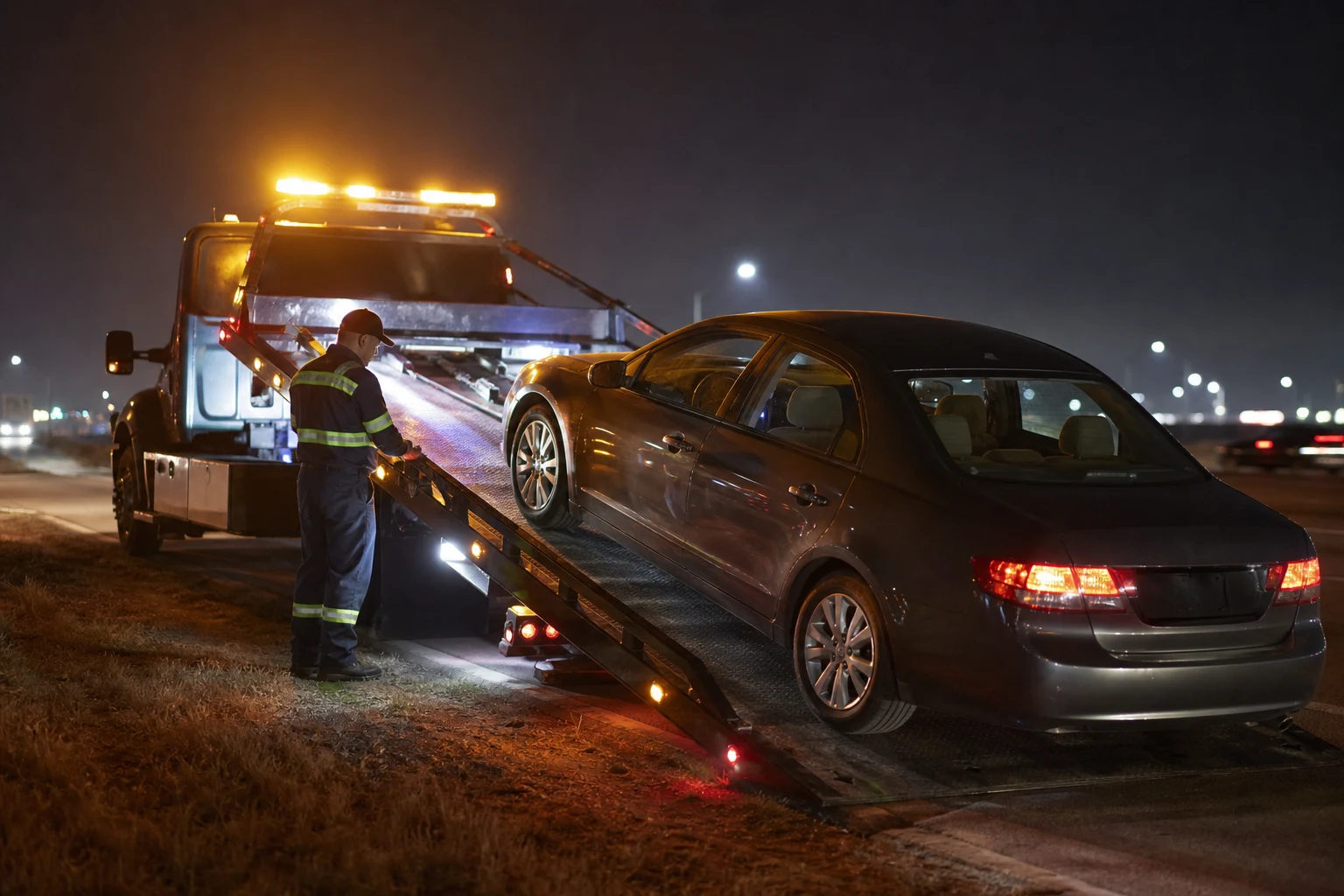
If your brakes are grinding, your pedal has gone soft or sunk toward the floor, or the car simply doesn't feel safe to stop, don't try to push through rush-hour traffic to reach a shop on your own. Call for towing service instead. Our drivers use flatbed transport so a brake problem doesn't turn into a breakdown, or worse, a collision, in the middle of a busy stretch like I-30 or the Tollway during rush hour.
What to Do If You Notice Brake Wear on the Road
- Listen for the type of sound. A fading squeal is different from a constant grind, and that difference tells you how urgent the problem is.
- Pay attention to the pedal. A pedal that feels normal but the car squeals is one situation. A pedal that feels soft, low, or requires pumping is a different, more urgent one.
- Ease off aggressive braking where you safely can, giving yourself more following distance so you're not relying on hard stops in traffic.
- Get it inspected soon if the sign is mild, or stop driving if the brakes are grinding or the pedal feels unreliable.
- Call for help if the car doesn't feel safe to stop. Request roadside assistance rather than continuing to your destination on brakes you can't fully trust.
Related Reading for Dallas Drivers
Brake wear is one of several vehicle warning signs that can turn a routine Dallas commute into a roadside emergency. If a dashboard light shows up alongside a braking concern, our guide to a check engine light in Dallas walks through steady versus flashing warnings and when to pull over. And if it's a tire issue rather than a brake issue causing the pulling or vibration, our tire blowout prevention guide covers the warning signs that look similar but call for a different response.
Brake trouble that develops mid-drive can also turn into a full breakdown if it's ignored. If you're already stuck on I-45 or I-20 when a brake problem shows up, our guide to a car breakdown on I-45 or I-20 near Dallas covers what to do immediately to stay safe until help arrives.
FAQs About Brake Wear in Dallas Traffic
What causes faster brake wear in Dallas traffic?
Stop-and-go congestion on highways like LBJ Freeway, Central Expressway, and I-35E forces constant braking rather than steady cruising, which wears pads down much faster than highway driving. Summer heat adds to the problem: hot pavement and hot brake components don't cool between stops the way they would in milder weather, which accelerates wear on pads and rotors alike.
Is it safe to keep driving with squealing brakes?
A light squeal, especially one that fades once you're moving, is often just a worn wear indicator doing its job and warning you it's time for new pads soon. It's usually safe to drive carefully to a shop in the next few days. Grinding, a pulsing pedal, or a pedal that sinks toward the floor are different — those mean it's time to stop driving and get the car inspected before continuing.
What does it mean if my brake pedal feels soft or goes to the floor?
A soft or sinking pedal usually points to a fluid leak or air in the brake lines, both of which reduce your ability to stop the car. This is not something to drive through. Pull over as soon as it's safe, and don't continue on Dallas-area highways with a pedal that isn't giving you firm, predictable stopping power.
Does Texas Tows tow vehicles with brake problems?
Yes. If your brakes are grinding metal-on-metal, the pedal has gone soft or sunk to the floor, or the car doesn't feel safe to stop reliably, we provide 24/7 towing and roadside assistance across Dallas-Fort Worth using flatbed transport to get the vehicle to a repair shop without driving it further.
Can I drive to a mechanic myself if my brakes are grinding?
It's risky. Grinding means the pads have worn through and metal is contacting metal, which reduces stopping power and can damage the rotors further with every mile driven. On a crowded Dallas freeway, that's a real safety risk for you and everyone around you. Calling for a tow rather than continuing to drive is the safer choice once brakes are grinding.
Brakes Not Feeling Right in Dallas Traffic? Call Texas Tows 24/7
A little brake squeal isn't usually an emergency, but grinding, a soft pedal, or a car that doesn't stop the way it should is. Don't push through Dallas-Fort Worth traffic on brakes you can't fully rely on.
Call (817) 512-1024 for 24/7 towing and roadside assistance anywhere in Dallas-Fort Worth. Tell us what the brakes are doing and your exact location, and we'll get a flatbed to you to move your car safely without driving it further.
