
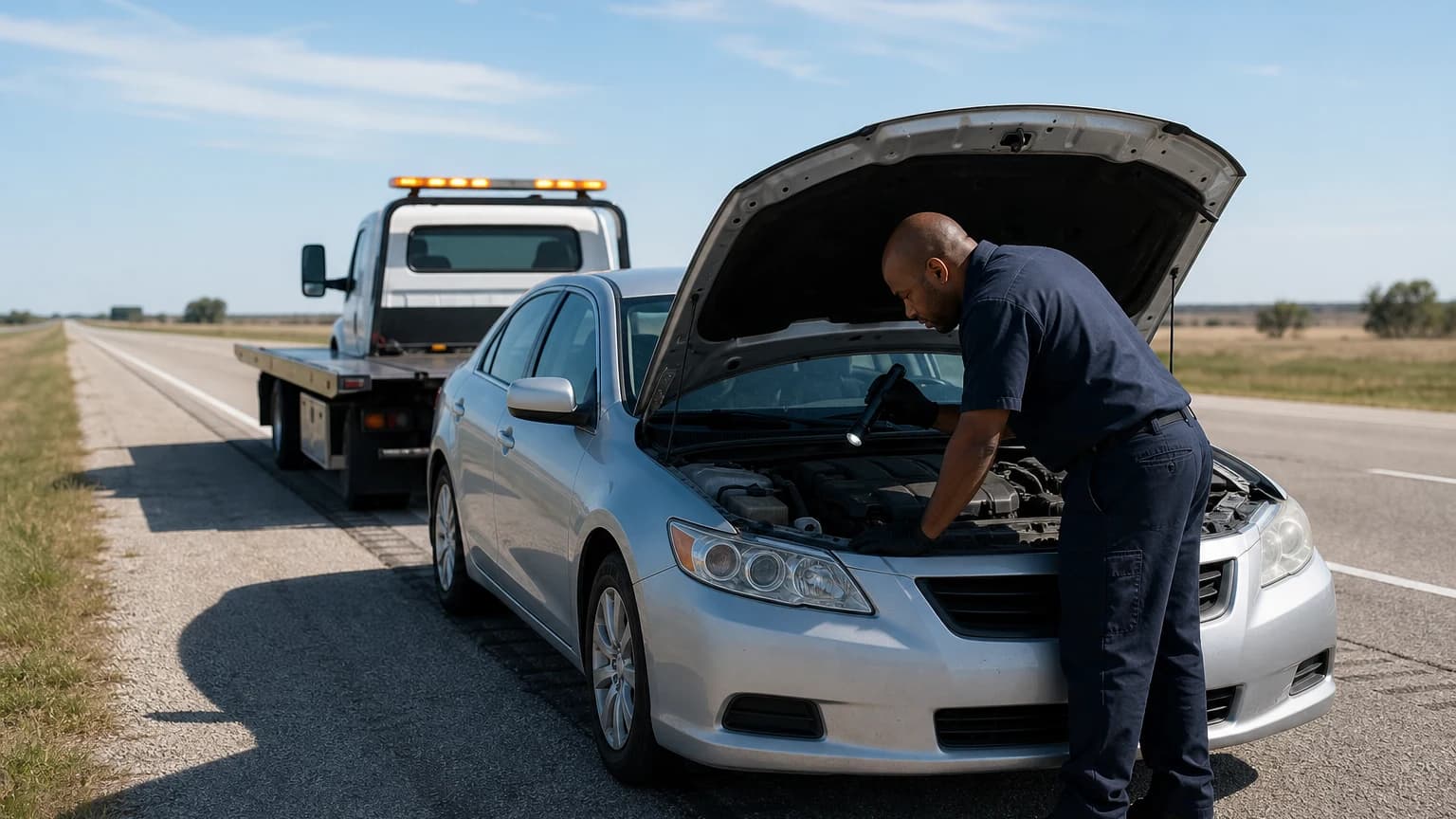
Few dashboard warnings cause more confusion than the check engine light in Dallas. It can mean anything from a loose gas cap to a failing sensor to an active engine misfire, and the dashboard itself gives you no way to tell which one you're dealing with. What matters most in the moment is knowing whether the light's behavior means you can keep driving or whether you need to pull over right away.
Texas Tows Inc. has served Dallas-Fort Worth drivers since 2015 under TDLR VSF license #0654316VSF, and our operators respond to check engine light calls across the metro every week, from a stalled commute on I-35E to a sudden warning on the Dallas North Tollway.
What a Check Engine Light in Dallas Means
The check engine light is connected to your vehicle's onboard diagnostic system, which constantly monitors dozens of sensors related to the engine, transmission, and emissions controls. When one of those sensors reports a reading outside its normal range, the system stores a trouble code and turns on the light. That's the entire message the light sends: something is outside normal parameters. It does not tell you whether the cause is a $20 gas cap or a $2,000 catalytic converter.
Common triggers include a loose or damaged gas cap, a failing oxygen sensor, worn spark plugs or ignition coils, a faulty mass airflow sensor, or a developing emissions-system problem. Only a diagnostic scan tool, which reads the stored trouble code, narrows down the actual cause. Guessing based on how the car "feels" is unreliable, since several unrelated problems can trigger the exact same light.
Steady Light vs. Flashing Light: Why the Difference Matters
The single most important thing to notice is whether the light is steady or flashing, because the two situations call for different responses.
- Steady light: Usually indicates a problem that isn't causing immediate damage: a sensor drifting out of range, a loose gas cap, or an emissions component starting to wear out. You can typically continue to a mechanic, though it's smart to avoid hard acceleration and long highway stretches until it's diagnosed.
- Flashing light: Signals an active engine misfire. Unburned fuel is passing into the exhaust system, where it can overheat the catalytic converter within minutes and turn a minor repair into an expensive one. Reduce speed, avoid accelerating hard, and get to a safe shoulder or parking lot as soon as you reasonably can.
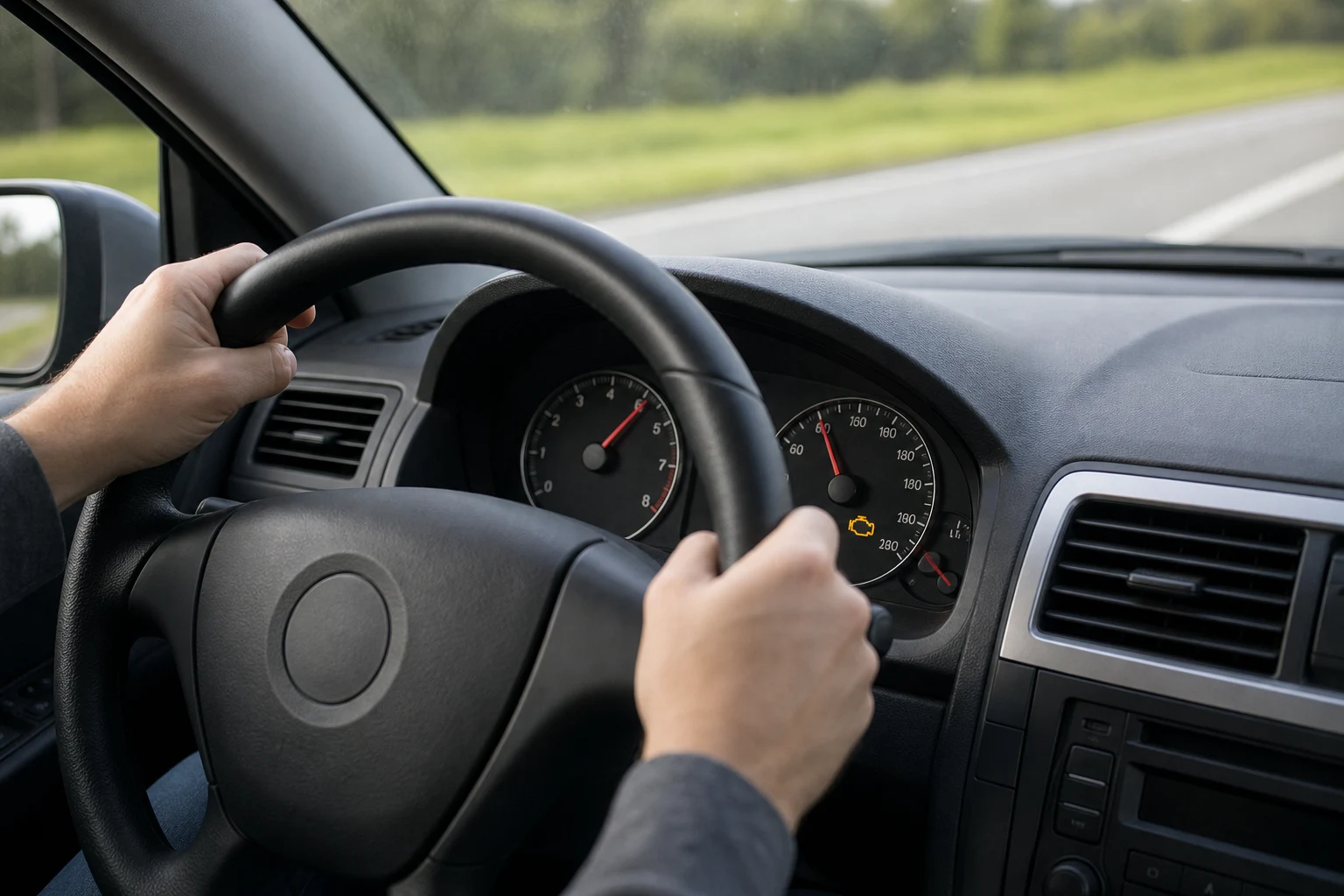
Is It Safe to Keep Driving on Dallas Roads?
Beyond the light itself, pay attention to how the car is performing. A rough idle, a noticeable loss of power, a burning smell, or the temperature gauge climbing toward the red are all signs that continuing to drive risks turning a repair into a breakdown. On a crowded stretch of LBJ Freeway or Central Expressway, a sudden loss of power is also a safety hazard for everyone around you, not just an inconvenience.
If the car is driving normally and the light is steady, plan a trip to a mechanic within the next day or two rather than continuing to drive on it indefinitely. If anything feels off beyond the light itself, treat it as a sign to get off the road at the next safe exit or parking lot rather than pushing through to your original destination.
What to Do the Moment the Light Comes On
- Check whether it's steady or flashing. This is the first thing to confirm, since it determines everything else you do next.
- Check your gas cap. A loose or missing gas cap is one of the most common causes of a steady light. If it was loose, tighten it. The light may take a few drive cycles to turn off on its own even after the cap is fixed.
- Note how the car is performing. Rough idling, hesitation, unusual smells, or a rising temperature gauge all matter more than the light alone.
- Avoid hard acceleration and high speeds until the car has been scanned, especially if the light is flashing or the engine feels rough.
- Get the code read. Many Dallas auto parts stores offer free code reads, or a mechanic can pull the code during a diagnostic visit.
- Call for help if the car doesn't feel safe to continue. If the light is flashing, the car loses power, or you smell fuel or burning, stop driving and request roadside assistance rather than pushing on to your destination.
When a Check Engine Light in Dallas Means You Need a Tow
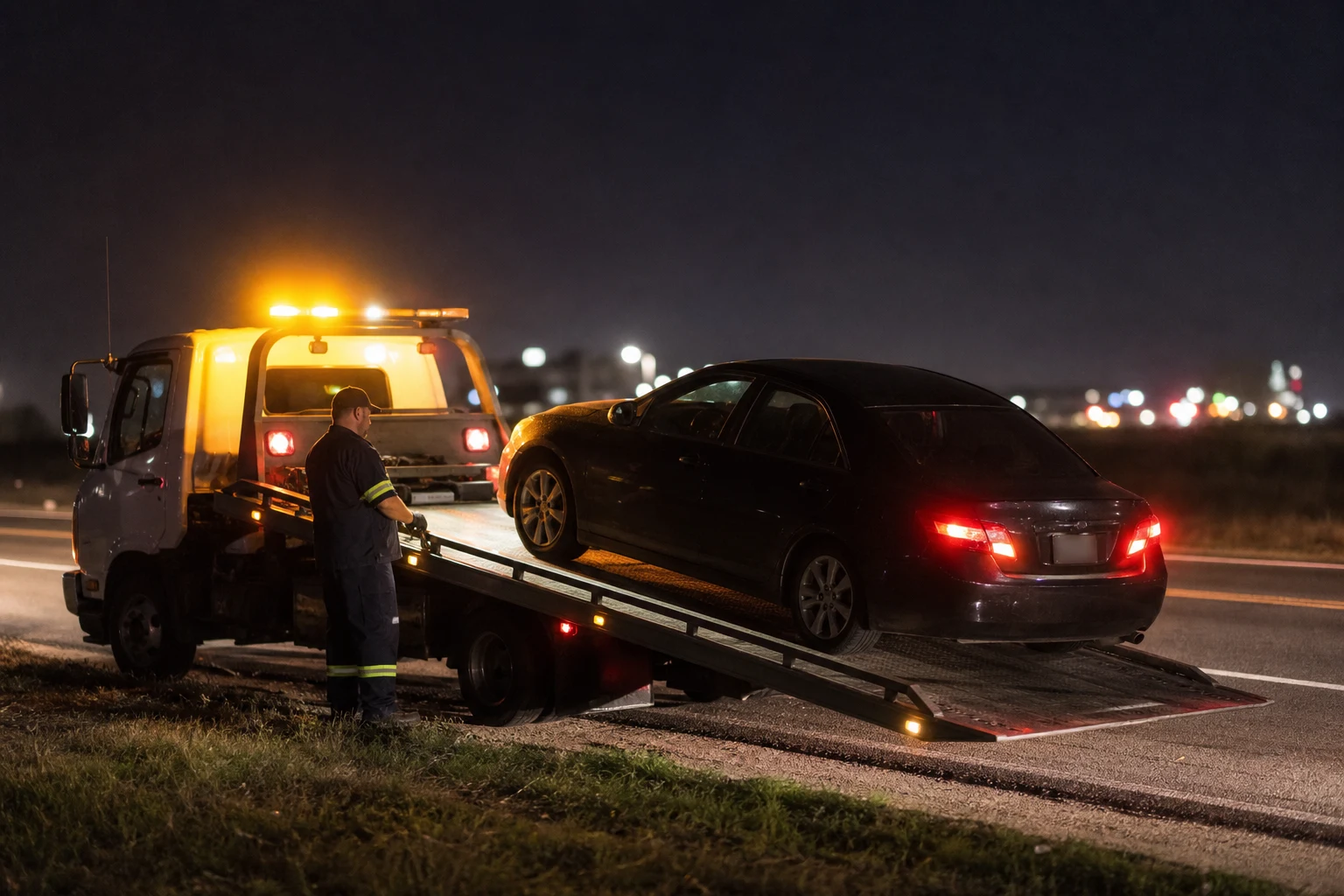
Not every check engine light ends in a tow, but some situations call for one without much debate. Call for towing service instead of continuing to drive if you notice a flashing light combined with rough running or a loss of power, a burning or fuel smell inside or outside the cabin, smoke from under the hood, a temperature gauge pushing into the red, or any moment where the car doesn't feel safe to control. Our drivers use flatbed transport for vehicles that shouldn't be driven further, so a developing engine problem doesn't turn into a stranded breakdown on I-30 or I-20 during rush hour.
A check engine light sometimes appears alongside charging-system trouble. If your battery is also involved, our guide to a dead battery in Dallas walks through how to tell the two problems apart before help arrives.
Texas Emissions Inspections and the Check Engine Light
Dallas, Tarrant, Collin, Denton, and several other North Texas counties require an annual vehicle emissions inspection as part of the state safety inspection. An illuminated check engine light is an automatic fail at inspection time, no matter what triggered it or how minor the underlying issue turns out to be. Inspectors also check that your vehicle's onboard computer has completed its required emissions readiness monitors, so a light that reappears right after a repair, or a battery that was recently disconnected, can also cause a fail until the system finishes running its checks. Diagnosing the code promptly prevents both a roadside breakdown and a failed inspection down the road.
DFW's summer heat adds another layer worth knowing about: extreme temperatures put extra strain on evaporative emissions components and cooling systems, which is part of why our drivers see a seasonal uptick in check engine light calls once temperatures climb. If a warm-weather drive triggers the light alongside signs of overheating, our guide to car overheating in Dallas summer heat covers the steps to take before a cooling-system problem causes lasting engine damage.
FAQs About the Check Engine Light in Dallas
Is it safe to drive with the check engine light on in Dallas?
It depends on whether the light is steady or flashing. A steady light usually means you can drive carefully to a mechanic soon, though you should avoid highway speeds and heavy acceleration. A flashing light signals a serious misfire that can damage the catalytic converter within minutes. Pull over safely and stop driving as soon as you can.
What does a flashing check engine light mean?
A flashing check engine light almost always points to an active engine misfire. Unburned fuel is reaching the exhaust system, which can overheat and destroy the catalytic converter quickly. Reduce speed, avoid hard acceleration, and get to a safe shoulder or parking lot as soon as possible.
Will a check engine light fail my Texas vehicle inspection?
Yes. Dallas, Tarrant, Collin, Denton, and several other North Texas counties require an annual vehicle emissions inspection, and an illuminated check engine light causes an automatic fail regardless of the underlying cause. The code needs to be diagnosed and the light needs to stay off before your vehicle can pass.
Does Texas Tows provide towing for a check engine light problem?
Yes. If your check engine light is flashing, paired with a loss of power, or the vehicle is not safe to continue driving, we provide 24/7 towing and roadside assistance across Dallas-Fort Worth to get you to a repair shop or a safe location.
Can I ignore a steady check engine light?
You can drive with a steady light for a short time, but ignoring it is risky. A loose gas cap and a failing catalytic converter can trigger the same light, and only a diagnostic scan tells you which one you have. Waiting too long often turns a minor repair into a much bigger one.
Check Engine Light On in Dallas? Call Texas Tows 24/7
A check engine light doesn't always mean an emergency, but it means something worth checking before you keep driving on it. If the light is flashing, the car is losing power, or it doesn't feel safe to continue, don't try to push through to your destination.
Call (817) 512-1024 for 24/7 towing and roadside assistance anywhere in Dallas-Fort Worth. Tell us what the light is doing, how the car is running, and your exact location, and we'll dispatch the right help to get you off the road safely.
