
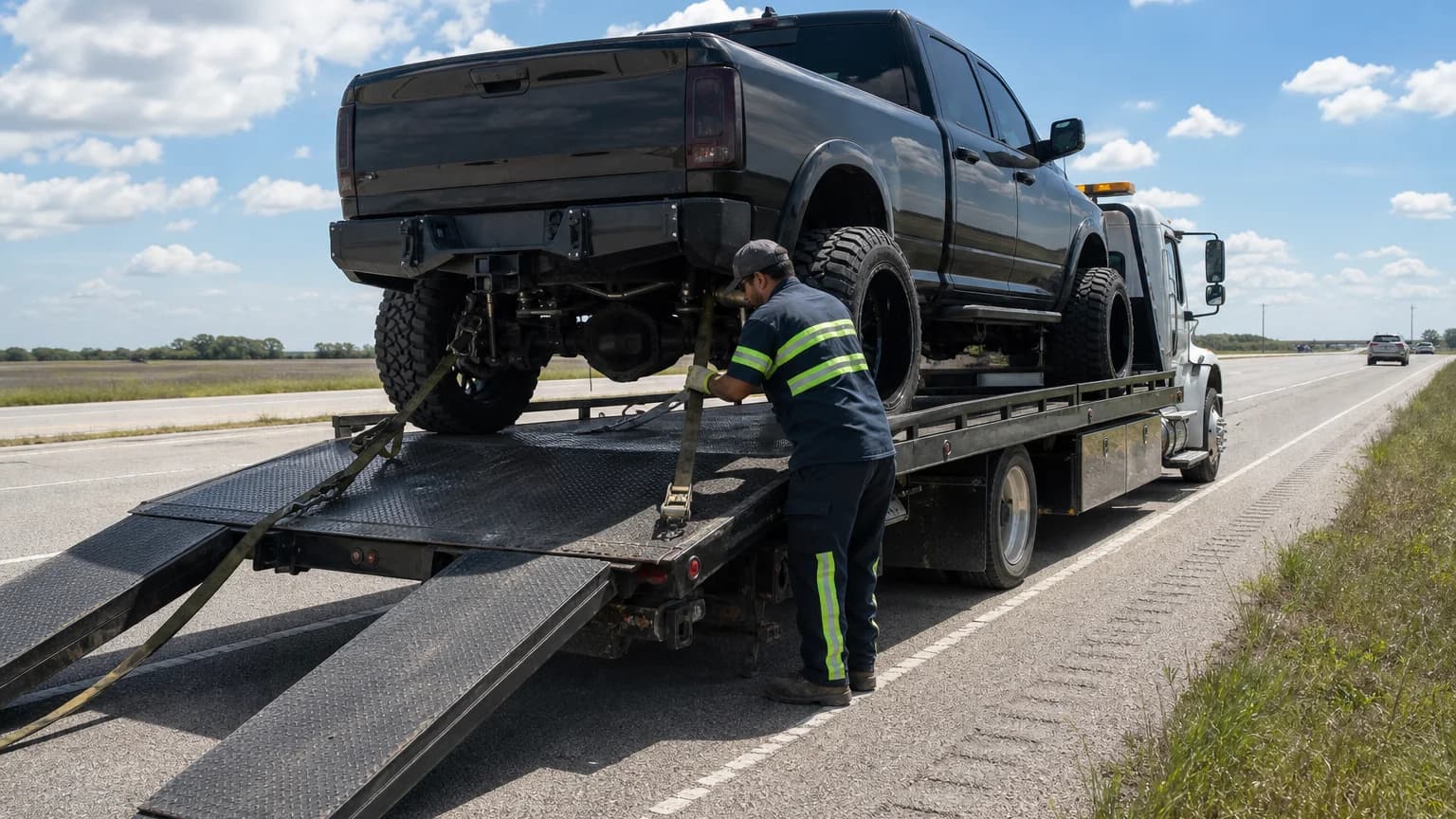
Towing a lifted truck in Dallas brings a handful of problems a stock vehicle never does. The extra ride height, the longer suspension travel, and the wider, heavier tires all change where a tow truck can safely grab the vehicle and how it needs to ride once it's loaded. Texas Tows Inc. has handled lifted trucks across Dallas-Fort Worth since 2015, and our drivers know the difference between a routine pickup and one that needs a second look before the straps go on.
Why Towing a Lifted Truck in Dallas Requires a Flatbed
A lift kit changes more than how a truck sits. It raises the frame, stretches the suspension's range of motion, and often relocates the factory tow points to a height or angle the equipment wasn't built around. A wheel-lift tow truck grips the front or rear tires and raises one end of the vehicle, which puts real stress on whatever is holding that end up, stock bumper, aftermarket control arms, or the suspension itself. On a lifted truck, that stress lands somewhere it wasn't designed to go.
A flatbed sidesteps the problem entirely. The truck rides flat on a level deck with its own suspension at rest, so nothing is hanging, flexing, or bearing weight it wasn't built for. That's why our dispatchers default to a flatbed for almost any lifted truck call across DFW, even for a short tow.
What Our Crews Check Before Loading a Lifted Truck
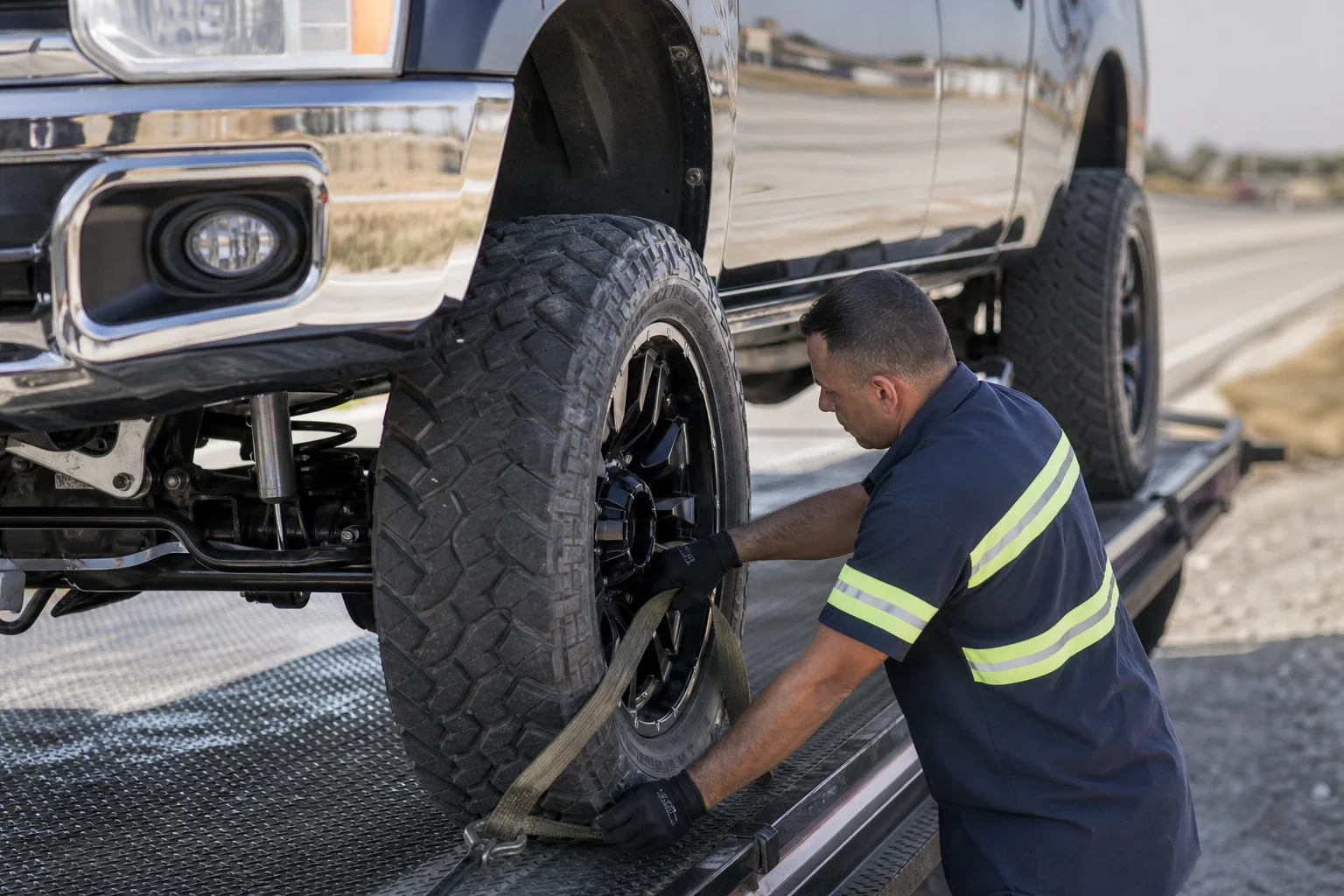
Before a lifted truck goes on the flatbed, our drivers run through a short checklist that a stock vehicle doesn't need:
- Ramp clearance. Extra ride height and long front overhangs can scrape on a standard ramp angle, so the approach gets adjusted before the truck starts rolling on.
- Strap placement and rating. Oversized tires are heavier and wider than stock, so straps need to sit at the correct point on the wheel and be rated for the extra load.
- Suspension travel. With the truck loaded flat, the crew checks that nothing in the lift kit, shocks, control arms, sway bar links, is left under tension once the load is secured.
- Overall height. A lifted truck sitting on a flatbed can push the total height close to overpass or garage clearance limits, so the route matters as much as the load itself.
None of this is unusual for an experienced flatbed crew, but it's exactly why a generic tow truck request can go sideways on a modified vehicle. If you know your lift height and tire size when you call, passing that along lets dispatch send a truck already sized for the job.
Common Mistakes When Towing a Modified or Lifted Truck
We've seen a few avoidable problems show up more than once on lifted trucks across the DFW area:
- Defaulting to a wheel-lift without asking. Not every towing company stops to ask about a lift kit before sending equipment, and a standard wheel-lift on a heavily modified truck is where damage tends to happen.
- Strapping at factory tie-down points that have moved. A lift kit can shift where the safest strap point sits, and using the factory location blindly can mean securing the load somewhere it was never meant to carry weight.
- Ignoring total loaded height. A tall truck on a flatbed deck adds up fast, and a route that doesn't account for that extra height risks a low clearance under a Dallas overpass or parking structure.
What to Do If Your Lifted Truck Breaks Down in Dallas
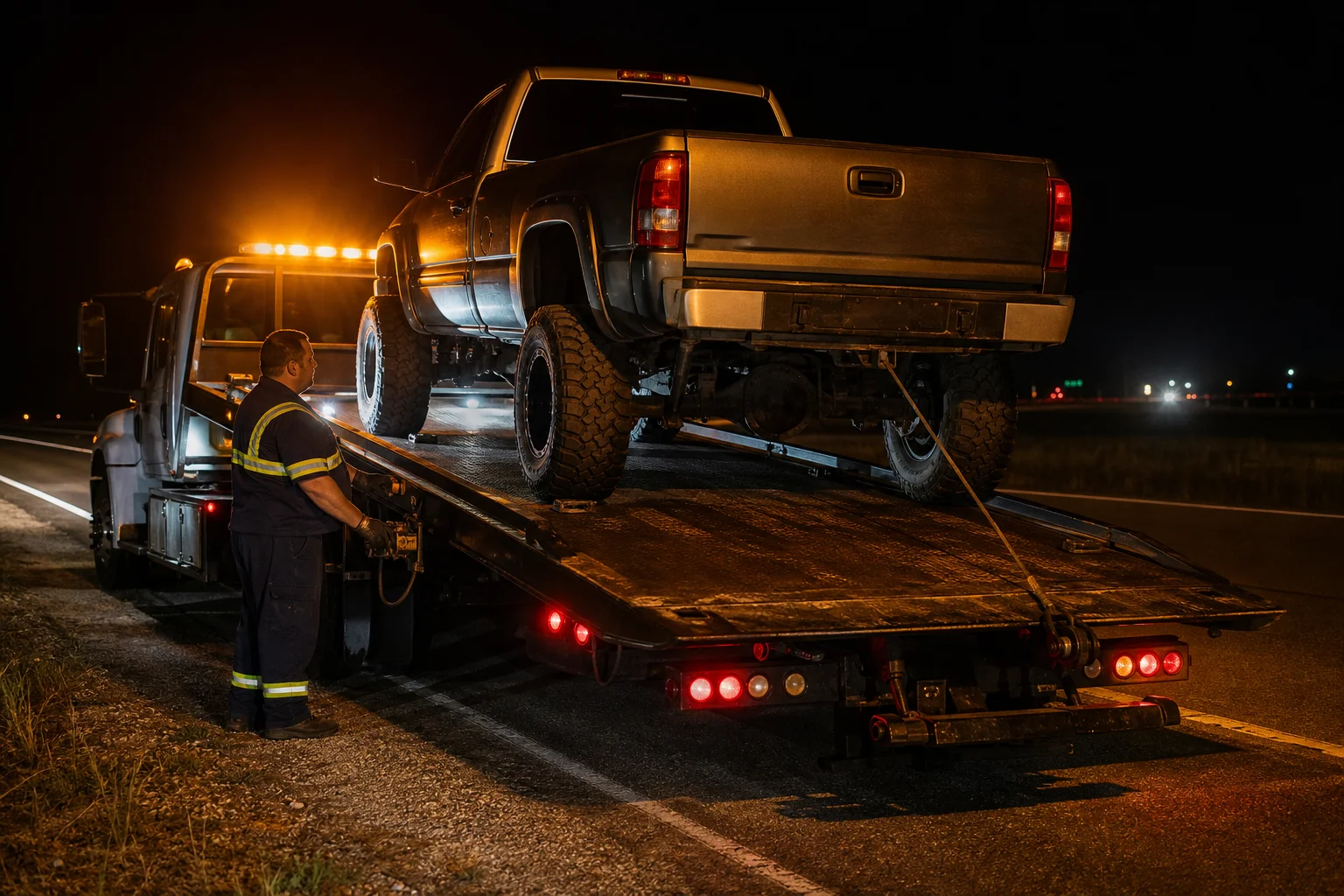
If your lifted truck won't start, won't move, or needs to come off a trail or shoulder somewhere across Dallas-Fort Worth, Irving, Arlington, or Plano, get it off the travel lane if you safely can and turn on your hazards first. From there, call ahead with whatever details you have, lift height, tire size, two-wheel or four-wheel drive, so dispatch can send a flatbed that's already set up for the load instead of discovering the mismatch on arrival.
The same logic applies to any AWD or 4WD vehicle with a factory drivetrain that can't be towed on two wheels, and it's part of why our crews default to flatbed over wheel-lift whenever a vehicle's setup calls for it.
FAQs About Towing a Lifted Truck in Dallas
Can a lifted truck be towed with a wheel-lift tow truck?
Usually not safely. A wheel-lift grips the tires and raises one end of the vehicle, but a lifted truck's taller frame, longer suspension travel, and oversized tires change the angles the equipment was designed around. Most of our dispatchers default straight to a flatbed for any lifted truck to avoid frame, bumper, or suspension damage.
Why does a lifted truck need a flatbed instead of regular towing?
A flatbed carries the entire vehicle on a level deck, so none of its weight hangs from a hitch, axle, or lift point that may have been modified from the manufacturer's original spec. With a lift kit, those stock tow points often sit at a different height or angle than the equipment expects, which makes a full flatbed load the safer call.
Will towing damage my suspension if my truck has a lift kit?
It can, if the wrong method is used. Dragging a lifted truck on a wheel-lift can overextend the suspension travel or put uneven load on aftermarket control arms and shocks. Loading it flat onto a flatbed with the suspension at rest avoids that stress entirely.
Do oversized tires make towing a lifted truck harder?
They add a few real constraints. Oversized tires are heavier and wider than stock, so straps need to be rated and positioned correctly, and the extra height changes ramp clearance going onto the flatbed. None of it is unusual for an experienced flatbed crew, but it does rule out a generic tow setup.
Does Texas Tows tow lifted trucks anywhere in Dallas-Fort Worth?
Yes. We dispatch flatbed trucks sized for lifted pickups across the DFW Metroplex 24/7, whether you're broken down on I-35E, parked at a trailhead, or need one moved after a repair. Call ahead with the lift height and tire size if you have them, so we send the right truck the first time.
Need Your Lifted Truck Towed in Dallas-Fort Worth? Call 24/7
A modified truck deserves a tow crew that checks the details before loading it, not one that treats it like any other pickup. Our towing service and flatbed towing teams dispatch trucks sized for lifted and oversized vehicles anywhere across Dallas-Fort Worth, day or night.
Call (817) 512-1024 for 24/7 emergency towing in Dallas-Fort Worth. We're TDLR-licensed (VSF #0654316VSF) and have handled modified and lifted vehicles across DFW since 2015, so your truck is in the hands of a crew that's seen this setup before.
