

Towing a boat or trailer in Dallas can become complicated fast when the tow vehicle quits, a trailer tire fails, the hitch has a problem, or a loaded rig is stranded where traffic cannot easily move around it. A normal passenger-car breakdown is already stressful. Add a boat, trailer, ramps, extra length, and a busy DFW roadway, and the right next step depends on the whole combination—not just the truck or SUV.
Texas Tows helps Dallas-area drivers make a safe transport decision when a boat-and-trailer setup cannot continue normally. Whether you are leaving Lake Ray Hubbard, heading home through East Dallas, or stopped near I-30 or the Dallas North Tollway, the priority is to protect people, traffic, the vehicle, and the equipment. A clear description to dispatch helps get the appropriate service plan started without guesswork.
Since 2015, our licensed and insured Texas Tows team has helped Dallas drivers with transport decisions when a vehicle-and-trailer combination cannot continue safely. We operate under TDLR #0654316VSF, and our operators begin with the location, equipment condition, and access details before recommending the next step.
First Steps When a Boat or Trailer Problem Stops Your Trip
Start with the immediate surroundings. If the rig can still be moved safely, pull to a wide paved area, parking lot, ramp staging lane, or shoulder that keeps as much distance as possible from moving traffic. Turn on hazard lights. If you are on a high-speed roadway, on a narrow bridge, or in an active lane, do not create a second emergency by trying to make a roadside adjustment in traffic.
- Protect people first. If there is a crash, injury, smoke, fuel odor, fire, or immediate traffic exposure, move to a safe location when possible and call 911 before arranging towing.
- Do not rush to unhitch. A loaded trailer can move, block access, or create a new hazard if it is disconnected without a stable surface and the right equipment.
- Look without crawling under the rig. Note a flat tire, damaged wheel, loose-looking connection, warning light, or visible fluid leak, but do not place yourself under a vehicle or trailer on the roadside.
- Share a specific location. A launch name, cross street, ramp lane, travel direction, nearby exit, or landmark is more useful than a broad neighborhood name alone.
Your goal is not to diagnose every mechanical issue at the scene. It is to prevent further damage and give dispatch enough information to arrange the right response. That is especially important when the trailer is loaded, the boat is still on it, or the setup is occupying a launch lane or a travel lane.
Why Boat and Trailer Towing Is Different
A boat trailer changes the size, balance, connection points, and handling requirements of the call. The tow vehicle and trailer are linked, but they do not necessarily have the same problem. A truck that will not start may leave a perfectly usable trailer behind it. A trailer tire or bearing issue may make the tow vehicle fine but prevent the rig from traveling safely. Collision damage, a failed hitch component, or a boat that has shifted on its trailer calls for a more careful assessment.
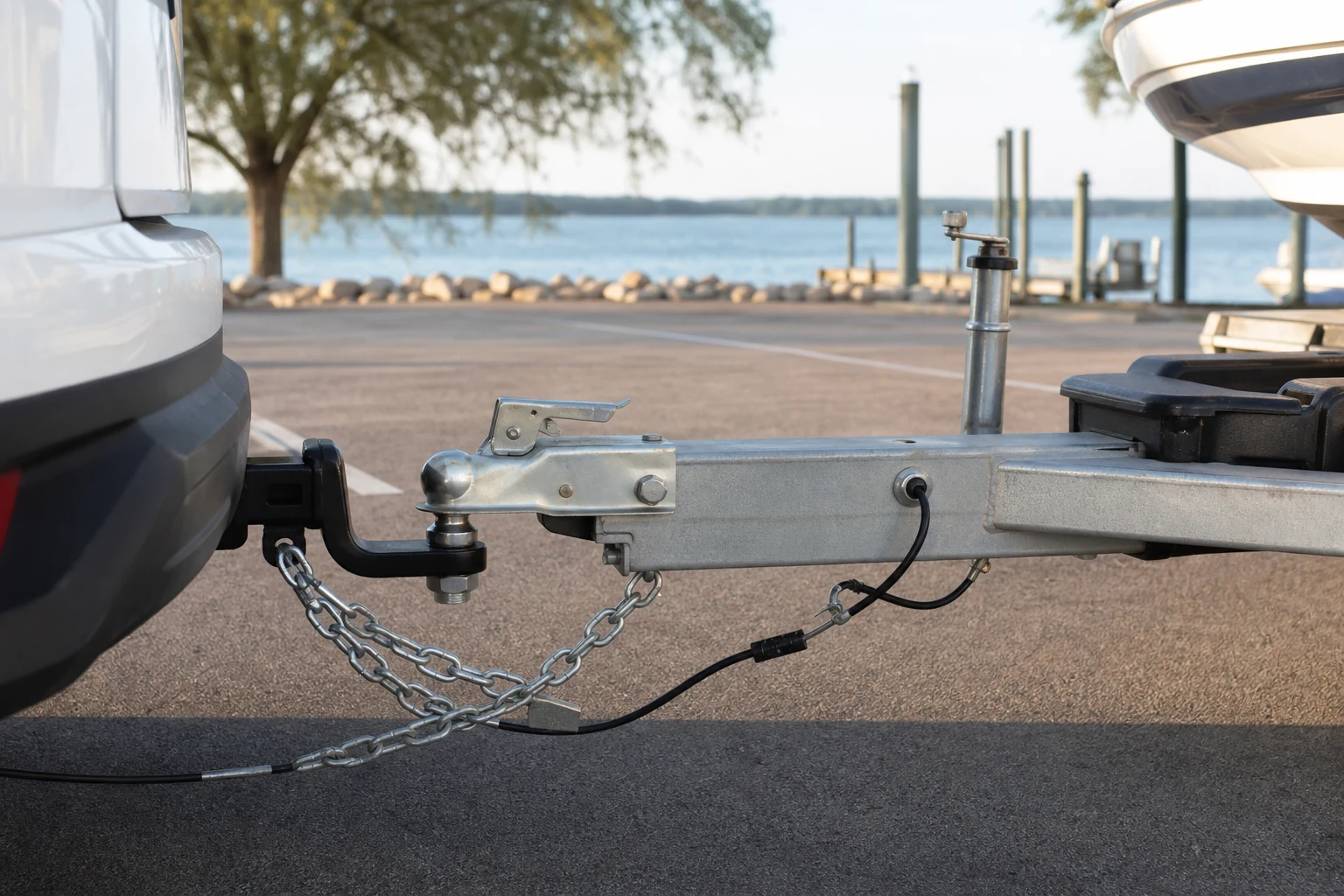
Before anyone moves the combination, the load and equipment need to be understood. The trailer should be supported by a tow vehicle and hitch setup appropriate for the combined load and the manufacturer instructions for the vehicle, hitch, trailer, and boat should be followed. This is not the moment to borrow a vehicle, use an unknown strap, or make an improvised connection just to clear a ramp or shoulder.
Professional transport can also be the safer choice when the boat is on a dual-axle trailer, the trailer cannot roll freely, the location has tight turns, or the driver cannot confirm what failed. Texas Tows can help assess the situation and coordinate a suitable plan through our professional towing service or vehicle-transport options.
What to Tell Dispatch Before Equipment Is Sent
The fastest way to avoid a mismatched response is to give a complete picture of the rig. Start with the tow vehicle year, make, model, and the issue you noticed. Then describe the boat and trailer in practical terms: approximate length, whether it is a single- or dual-axle trailer, whether it is loaded, whether it can roll, and whether a tire, wheel, hitch, lights, or connection appears damaged.
Access details matter just as much. Lake Ray Hubbard sits east of Dallas, while White Rock Lake is inside the city, and both can involve narrow launch lanes, busy weekend traffic, or limited turnaround room. Tell dispatch if you are at a lake ramp, inside a marina lot, under a low structure, on a divided road, at a fuel station, or parked on soft ground. A destination should also be ready: your home, a repair shop, a marina, or another confirmed location that can accept the vehicle and trailer.
Texas Transportation Code Chapter 547 addresses vehicle equipment. The requirements that apply to a particular trailer and load can vary, so do not assume a damaged light, tire, wheel, hitch, or connection is safe to use for the rest of the trip. Review the current Texas vehicle-equipment statute and the manufacturer guidance, or arrange professional transport when the condition is unclear.
If it is safe to do so, photos of the connection area, trailer wheels, and any visible damage can clarify what dispatch needs to plan for. Do not take photos from an active lane or walk behind a trailer that could move.
Protect the Tow Vehicle, Trailer, and Boat
A roadside choice that seems convenient can damage more than the part that first failed. Pulling a trailer with a compromised tire, wheel, axle, connection, or lighting system can make the situation worse. Likewise, forcing a disabled tow vehicle to move a loaded trailer can damage the powertrain or leave the rig in a more dangerous position.
For a routine travel issue, the vehicle owner's manual and trailer manufacturer guidance are the right references for towing limits, connection procedures, tire condition, and load securement. If the equipment is damaged, unclear, or stranded in an unsafe location, let a qualified professional assess transport instead of relying on assumptions. Drivers who need to move a vehicle without its usual setup can also review Texas Tows' vehicle transport service for the type of information dispatch will need.
The same caution applies to specialty tow vehicles. AWD, 4WD, low-clearance, hybrid, and electric vehicles can have manufacturer-specific handling requirements. Our guide to towing AWD and 4WD vehicles in Dallas explains why the method matters before the vehicle is moved.
Choose the Safest Route and Destination
A planned destination is part of the recovery, not an afterthought. A trailer repair business may need space to receive a boat-and-trailer combination. A marina may have specific arrival hours or access rules. A home driveway can be tight, sloped, or blocked by parked vehicles. Confirm that the destination can accept the rig before loading begins.
DFW traffic patterns also affect the safest route. A short trip across town can involve interchanges, construction, heavy afternoon traffic, or narrow local streets. Giving dispatch the actual destination and any time restrictions lets the operator plan transport around the equipment and access conditions, rather than arriving to find that the final drop point cannot be used.
If your issue began during a longer move, read our overview of vehicle transport from Dallas to Houston for additional planning considerations. The article is not a substitute for a current equipment assessment, but it can help you prepare the right questions before a transport call.
FAQs About Towing a Boat or Trailer in Dallas
Can Texas Tows move a boat that is still on its trailer?
Yes. Tell dispatch whether the boat remains on its own trailer, whether the trailer can roll, and whether the tow vehicle, trailer, hitch, tires, lights, or boat itself is damaged. Those details help determine the safest equipment and transport plan.
What should I do if my tow vehicle breaks down while pulling a boat?
Move as far from moving traffic as conditions safely allow, turn on hazard lights, and avoid disconnecting the trailer in an unsafe position. Share your exact location, vehicle and trailer details, and any visible damage with dispatch before attempting a repair or repositioning.
Should I tow a disabled boat trailer with another personal vehicle?
Do not improvise with a vehicle, hitch, or connection that is not rated and set up for the combined load. A professional can assess the tow vehicle, trailer condition, access, and destination instead of turning a roadside problem into a second incident.
What information does a towing company need for a boat or trailer call?
Have the location, vehicle year/make/model, approximate boat and trailer size, trailer axle count, hitch type, tire condition, whether the trailer is loaded, and the intended destination ready. Photos can also help when there is visible damage or a difficult access point.
Need Boat or Trailer Transport Help in Dallas?
A boat-and-trailer breakdown does not need to become a chain of rushed decisions. Keep people away from traffic, avoid improvised towing or unloading, and give Texas Tows a clear description of the location, tow vehicle, trailer, boat, visible issue, and destination. We will help determine the safest next step for the situation.
Texas Tows has served Dallas-area drivers since 2015. For 24/7 help with a boat, trailer, or tow-vehicle transport issue, call (817) 512-1024.
