
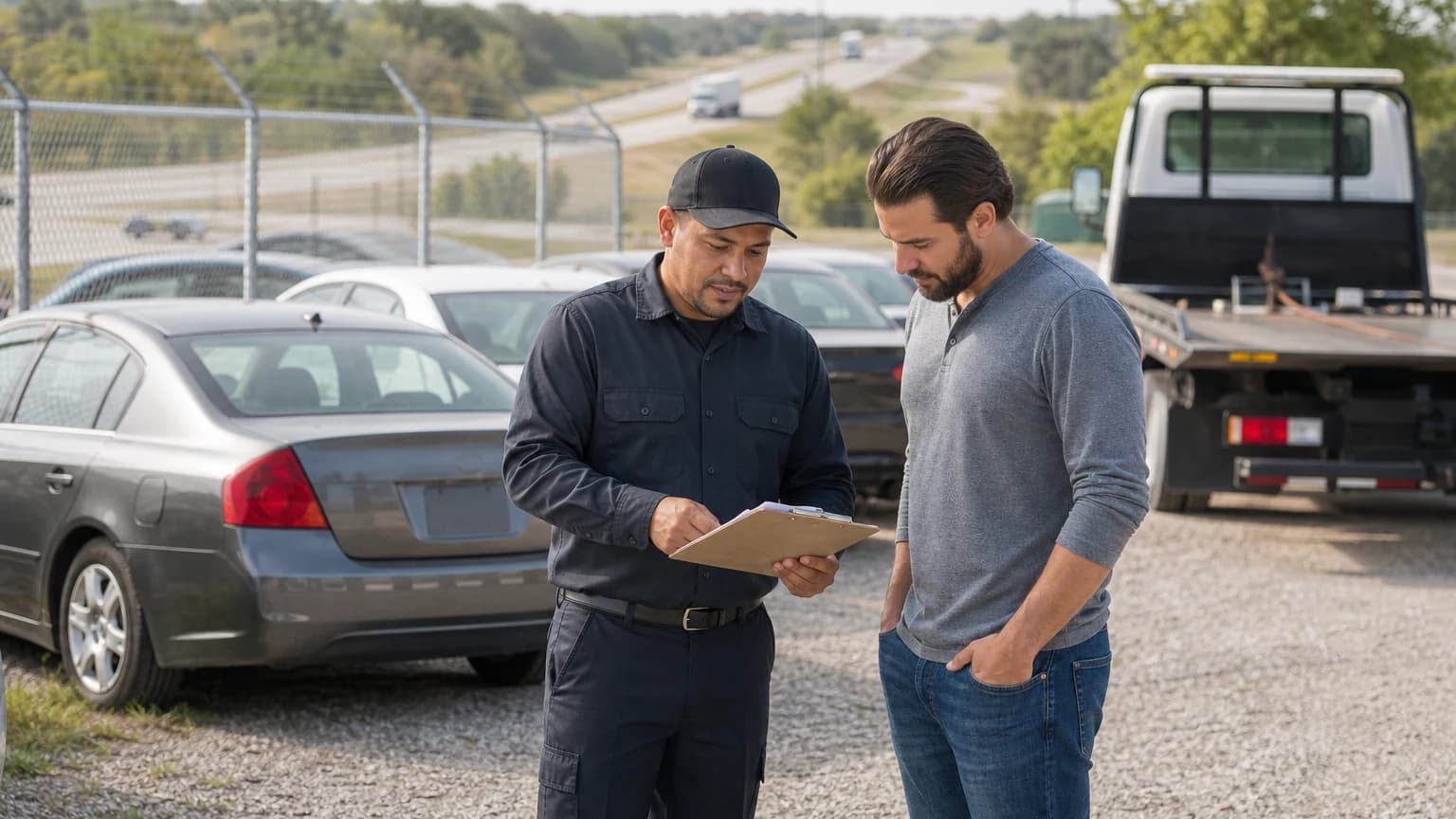
Few bills catch drivers off guard the way a towing storage invoice does. You expected the tow itself to cost something, but the number on the storage line can feel arbitrary, especially when nobody explained how it was calculated. Texas towing storage fees are not left to a facility's discretion, though. State law sets clear rules for what a licensed vehicle storage facility can charge, how it has to disclose those charges, and what happens if it doesn't follow either one. Knowing those rules before you need them puts Dallas-Fort Worth drivers in a much stronger position at the counter.
Texas Tows Inc. has operated as a licensed towing company and vehicle storage facility in the Dallas area since 2015 under TDLR VSF license #0654316VSF, and our team fields questions about storage charges from DFW drivers most weeks, usually right after a tow they didn't see coming. Most calls start the same way: someone picks up their vehicle, gets handed a total that's higher than they expected, and has no way to tell whether the number is fair or inflated.
What Texas Law Says About Towing Storage Fees
Vehicle storage facilities in Texas operate under Texas Occupations Code Chapter 2308, the state law governing towing companies and vehicle storage facilities that TDLR enforces. Any facility that stores a towed vehicle, whether it's a downtown Dallas apartment complex tow or a wreck cleared off I-30 in Fort Worth, has to hold a TDLR-issued VSF license to operate legally.
That license comes with real obligations beyond a certificate on the wall. A licensed facility must post its current fee schedule somewhere a customer can see it, and it must provide a copy of that schedule to anyone who asks. The fees a facility charges have to match what's on that posted schedule. A number invented on the spot, or one that changes depending on how the conversation goes, violates that requirement. If you're dealing with a tow that started as a non-consent tow from a private lot, our guide to private property towing laws in Texas covers what property owners and towing companies are allowed to do before a vehicle ever reaches a storage facility.
Chapter 2308 also requires a licensed facility to make a good-faith effort to notify the vehicle's owner and any lienholder that the vehicle is in storage, instead of letting daily fees stack up on a vehicle its owner doesn't know is missing. That notification requirement matters most after a wreck, when a driver is already dealing with an ambulance, a police report, and an insurance call, while the storage clock runs in the background.
Texas Towing Storage Fees: What's Legal to Charge
A few specific protections show up again and again in the disputes we hear about from DFW drivers:
- Posted, on-file rates only. The daily storage rate a facility charges has to match the rate it has on file with TDLR and posted at the facility. It can't charge a rate that was never disclosed anywhere.
- Drop fee protections. If you show up before your vehicle has been hooked up and hauled away, Texas law limits what the operator can charge for stopping the job, often called a drop fee. You shouldn't be charged a full tow and storage bill for a vehicle that never left the property.
- Standard payment methods. A facility can't force you into a single inconvenient payment method. State law requires accepting standard forms of payment, including cash, rather than restricting you to one option that's harder to use.
- Free access to personal property. You're entitled to retrieve personal belongings, car seats, work equipment, medication, and similar items from your vehicle during posted business hours without paying a release fee first, even if you haven't paid the towing and storage bill yet.
None of these protections require a lawyer to enforce, only the knowledge that they exist before you're standing at the counter looking at a stack of unfamiliar numbers.
Red Flags That Signal an Illegal Overcharge
Most Texas vehicle storage facilities follow the rules, but a small number rely on drivers not knowing them. Watch for these warning signs:
- A quoted rate that doesn't match the posted fee schedule, or a facility that refuses to show you the schedule at all.
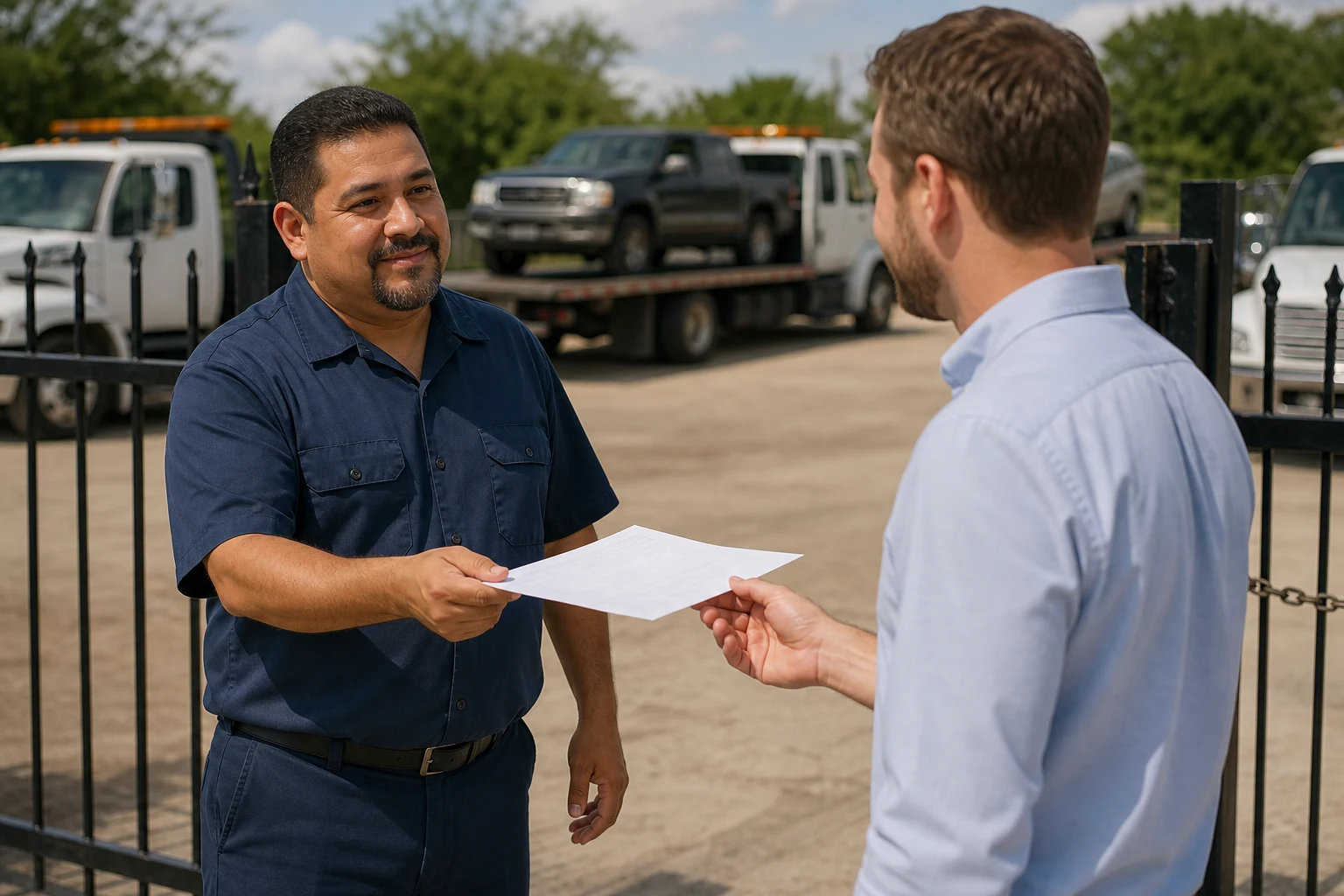
- No itemized receipt, or a receipt that lumps several vague charges into one number instead of breaking down the tow fee, storage rate, and any add-ons separately.
- Cash-only demands with no explanation, especially paired with pressure to pay immediately before you've seen a breakdown of the charges.
- A fee to access personal items inside your vehicle before you've paid anything toward the tow or storage bill.
- Storage charges for days that don't line up with when your vehicle arrived at the facility.
What to Do If You Think You've Been Overcharged in DFW
- Ask for the posted fee schedule in writing. A legitimate facility can produce this immediately; one that stalls or refuses is telling you something.
- Request an itemized receipt before you pay, if the situation allows it, and photograph the posted schedule and the receipt side by side.
- Pay under protest if you need your vehicle back urgently, and keep every document. You can still dispute an overcharge after paying.
- File a complaint with TDLR. The agency that licenses vehicle storage facilities also investigates consumer complaints about fees that don't match the law.
- Consider small claims court for a disputed amount you can't resolve directly with the facility. Texas small claims courts handle these cases without requiring an attorney.
Why This Matters Across Dallas-Fort Worth
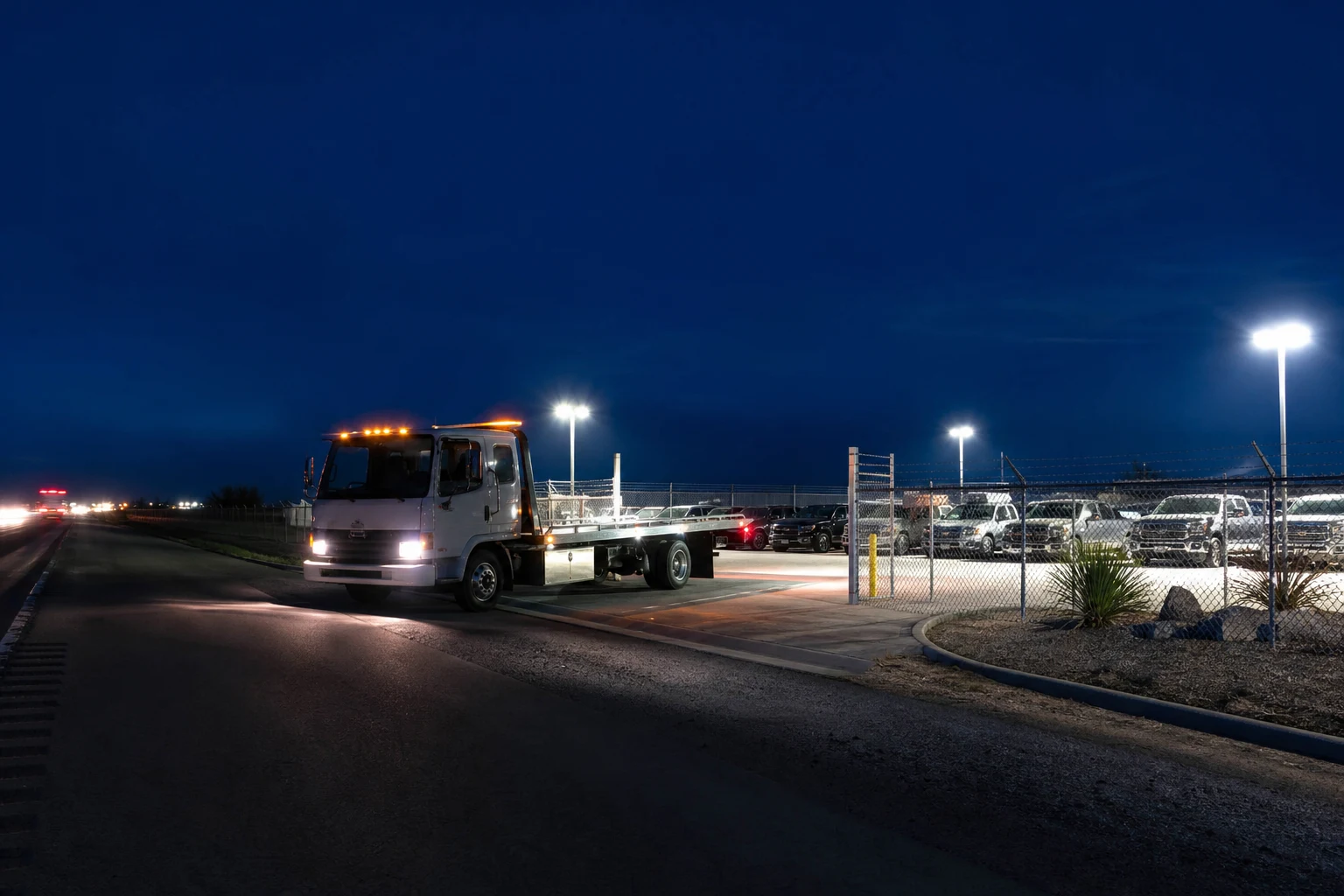
The Metroplex has grown fast, and so has the number of vehicle storage facilities scattered from downtown Dallas to Fort Worth, Irving, Arlington, and Plano. Enforcement varies by facility, and a driver towed from an apartment lot in Arlington or a private lot near Irving's DFW Airport corridor doesn't always know whether their vehicle went to a licensed, compliant facility or one cutting corners. Property managers and apartment complexes across DFW rely on licensed operators for unattended vehicle towing, and the same VSF rules apply no matter who requested the tow.
Accident-related tows add another layer worth knowing about. A multi-car wreck on a busy stretch like LBJ Freeway or the Dallas North Tollway can send several vehicles to storage at once, and the drivers involved rarely think to ask about fee schedules while they're still dealing with police reports and insurance calls. An unlicensed or noncompliant operator can use that distraction to overcharge, so learning these protections now, before you ever need them, is worth the ten minutes it takes.
Texas Tows Inc. operates as a fully licensed VSF, and every fee we charge matches our posted, on-file schedule before a driver ever has to ask. We'd rather explain the numbers upfront than have a customer feel blindsided by a bill later. For a broader look at what Texas law protects when your vehicle is towed, see our guide to your rights when your car is towed in Texas.
FAQs About Texas Towing Storage Fees
How much can a Texas towing company legally charge for storage?
Texas law doesn't set one fixed statewide number. Instead, it requires every licensed vehicle storage facility to file a fee schedule with TDLR, post that schedule at the facility, and charge no more than the posted rate. Ask to see the posted schedule if you're ever unsure whether a storage charge matches what the facility is legally allowed to bill.
What is a drop fee in Texas towing law?
A drop fee applies when you reach your vehicle before the tow truck has finished hooking it up and hauling it away. Texas law limits how much can be charged in that situation, since the vehicle never left the property or reached a storage facility. You shouldn't be billed a full tow and storage rate for a vehicle that was never towed.
Can a Texas towing company refuse to accept my credit card?
No. Texas law requires vehicle storage facilities to accept standard forms of payment, including cash, rather than limiting customers to a single payment method. A facility that insists on cash only, with no explanation, is a common red flag worth documenting.
Do I have to pay before I can get personal items out of my towed vehicle?
No. You're entitled to retrieve personal belongings from your vehicle during the facility's posted business hours without paying a release fee first, even before you've settled the towing and storage bill.
Where do I file a complaint about an illegal towing storage fee in Texas?
Complaints about vehicle storage facilities and towing companies go to the Texas Department of Licensing and Regulation (TDLR), the agency that licenses and regulates them under Texas Occupations Code Chapter 2308.
Need Towing You Can Trust in Dallas-Fort Worth? Call Texas Tows 24/7
Knowing these rules helps you recognize a trustworthy facility from the start, before a bill ever catches you off guard. If your vehicle needs to be towed anywhere in Dallas-Fort Worth, work with a company that posts its rates, explains its fees, and lets you verify both before you pay.
Call (817) 512-1024 for 24/7 towing service and roadside assistance in Dallas-Fort Worth. We're a licensed vehicle storage facility with transparent, posted rates, so you know exactly what to expect from the first call.
