

Your car has just been involved in a crash on I-75 or the North Dallas Tollway. Police are on the scene. A tow truck shows up — but did you call it, or did the city? That distinction matters more than most drivers realize, and getting it wrong can cost you hundreds of dollars in unnecessary storage fees or impound release charges.
In Dallas, two very different towing processes can follow an accident: apolice-ordered impound (also called a non-consent tow) and aconsent accident tow you arrange yourself. Texas law gives you the right to choose — but only if you know to ask.
What Is a Police Impound Tow?
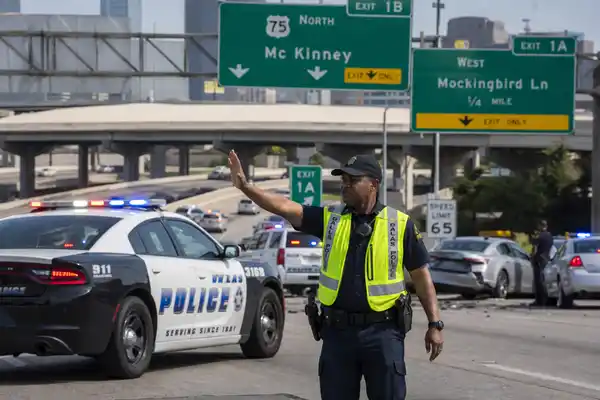
A police impound occurs when a law enforcement officer orders your vehicle towed — typically to a city-contracted lot — without your direct consent. Common triggers include:
- Your car is blocking a lane or creating a hazard and you cannot move it yourself
- The driver is arrested, incapacitated, or transported by EMS
- The vehicle is unregistered, uninsured, or has outstanding warrants
- Officers cannot locate the owner at a non-injury crash scene
Dallas Police Department contracts with several rotation tow operators — meaning the tow company is assigned by rotation, not chosen by you. UnderTexas Occupations Code Chapter 2308, rotation tow rates in Dallas are capped by city ordinance, but storage fees accumulate daily once the vehicle reaches the lot. Typical storage runs $25–$45 per day in the Dallas metro, on top of base tow fees of $175–$250.
What Is a Consent Accident Tow?
A consent tow is one you authorize — by calling a tow company of your choosing at the scene. This is your legal right under Texas law. Texas Transportation Code§550.062 allows drivers involved in a non-injury crash to arrange their own tow before police arrive (DPD response for non-injury accidents averages45–90 minutes).
When you consent to the tow, you retain several key protections:
- Right to choose your tow destination — you can direct the driver to take your vehicle to any repair shop, your home, or a storage facility of your choice
- Written estimate before towing — TX Occ. Code §2308.301 requires a signed disclosure of estimated charges before a consent tow begins
- TDLR-licensed operator — you can verify the company's license at tdlr.texas.gov before agreeing (Texas Tows license: #0654316VSF)
- No rotation markup — you negotiate rates directly; there's no city-mandated rotation surcharge
Key Differences at a Glance
| Factor | Police Impound | Consent Accident Tow |
|---|---|---|
| Who calls the tow? | Police officer | You |
| Company choice | City rotation list | Your choice |
| Destination | City-designated impound lot | Any location you specify |
| Storage fees | Accumulate at impound lot daily | Controlled by you |
| Written estimate required? | Yes (non-consent disclosure) | Yes (pre-tow estimate) |
| Release process | City lot + proof of ownership + fees | Direct with tow company or shop |
How to Retrieve Your Car from a Dallas Impound Lot
If your vehicle was impounded by DPD, here's the release process:
- Find your vehicle: Call DPD Records Division at (214) 671-3345or check the Dallas Police online impound lookup tool.
- Gather required documents: Valid government-issued ID, current vehicle registration or title in your name, and valid proof of insurance if required.
- Pay all fees: Tow fee + daily storage. Impound lots typically accept cash or debit; some accept credit. Fees must be paid before release.
- Act fast: Storage fees accumulate every day the vehicle sits. A car that sits 5 days can rack up $125–$225 in storage alone, on top of the base tow.
Under TX Occ. Code §2308.456, impound lots must provide 24-hour vehicle accessto retrieve personal property — even before you pay to release the car itself. Know this right.
Can You Refuse a Police-Ordered Tow in Texas?
In most cases, no — if an officer has legally ordered the tow for safety, blocking, or arrest reasons, refusal isn't an option. However, there are important nuances:
- Non-injury crash with driver present: If you are present, coherent, and the vehicle can be safely moved, you typically have the right to call your own tow company before the rotation tow is dispatched. Assert this right early — once the rotation truck is on the way, canceling it may involve a cancellation fee under TX Occ. Code §2308.
- Vehicle blocking traffic or creating a hazard: Officers may order an emergency tow regardless of your preference. The vehicle goes to the rotation lot.
- Driver arrested or incapacitated: If you are unable to make decisions at the scene, the vehicle will likely be impounded. A family member or attorney can then assist with release.
What to Say at the Scene to Protect Your Rights
Knowing the right thing to say can save you real money. If you are conscious and present at a Dallas crash scene:
- Tell the officer: "I'd like to call my own tow company."
- Call Texas Tows immediately: (817) 512-1024. We're available 24/7 and can reach most Dallas highways in under 30 minutes.
- Do not sign any documents from a rotation tow driver who arrives without your call — you have the right to cancel if you haven't consented.
- Ask our TDLR-licensed dispatcher for a written estimate before we hook up your vehicle. We provide this as standard practice.
Crash-Damaged Cars Need Flatbed Towing
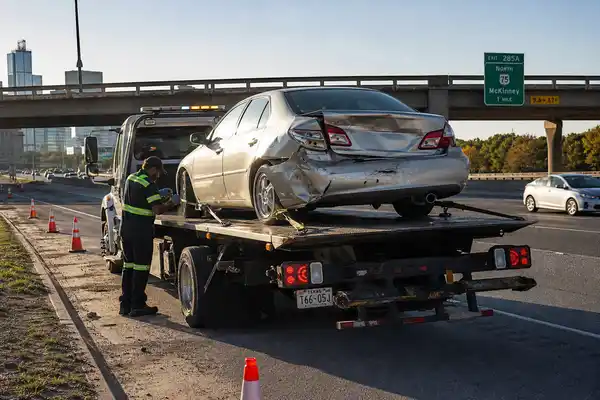
Whether the tow is ordered by police or called by you, a crash-damaged vehicle should always go on a flatbed truck — never a wheel-lift. Wheel-lift towing on a damaged car risks additional drivetrain damage, especially on AWD/4WD vehicles or cars with bent axles or fluid leaks.
Texas Tows uses flatbed trucks for all accident recovery work. If a rotation tow truck arrives with a wheel-lift for your crash-damaged vehicle, you have the right to ask for a flatbed. See our detailed breakdown:Why Crash-Damaged Cars Need Flatbed Towing.
Bottom Line: Know Before the Crash Happens
You don't have time to research your rights when you're standing on the shoulder of the LBJ Freeway after a collision. The key facts to remember:
- You have the right to call your own tow company in Texas — assert it early and clearly.
- A police impound means storage fees accumulate fast. Retrieve your vehicle as quickly as possible.
- Save (817) 512-1024 in your phone now. Texas Tows serves all Dallas highways 24/7 with TDLR-licensed drivers and flatbed trucks.
Need a tow right now or have questions about an impound?Learn about our accident recovery service or call us directly.
