
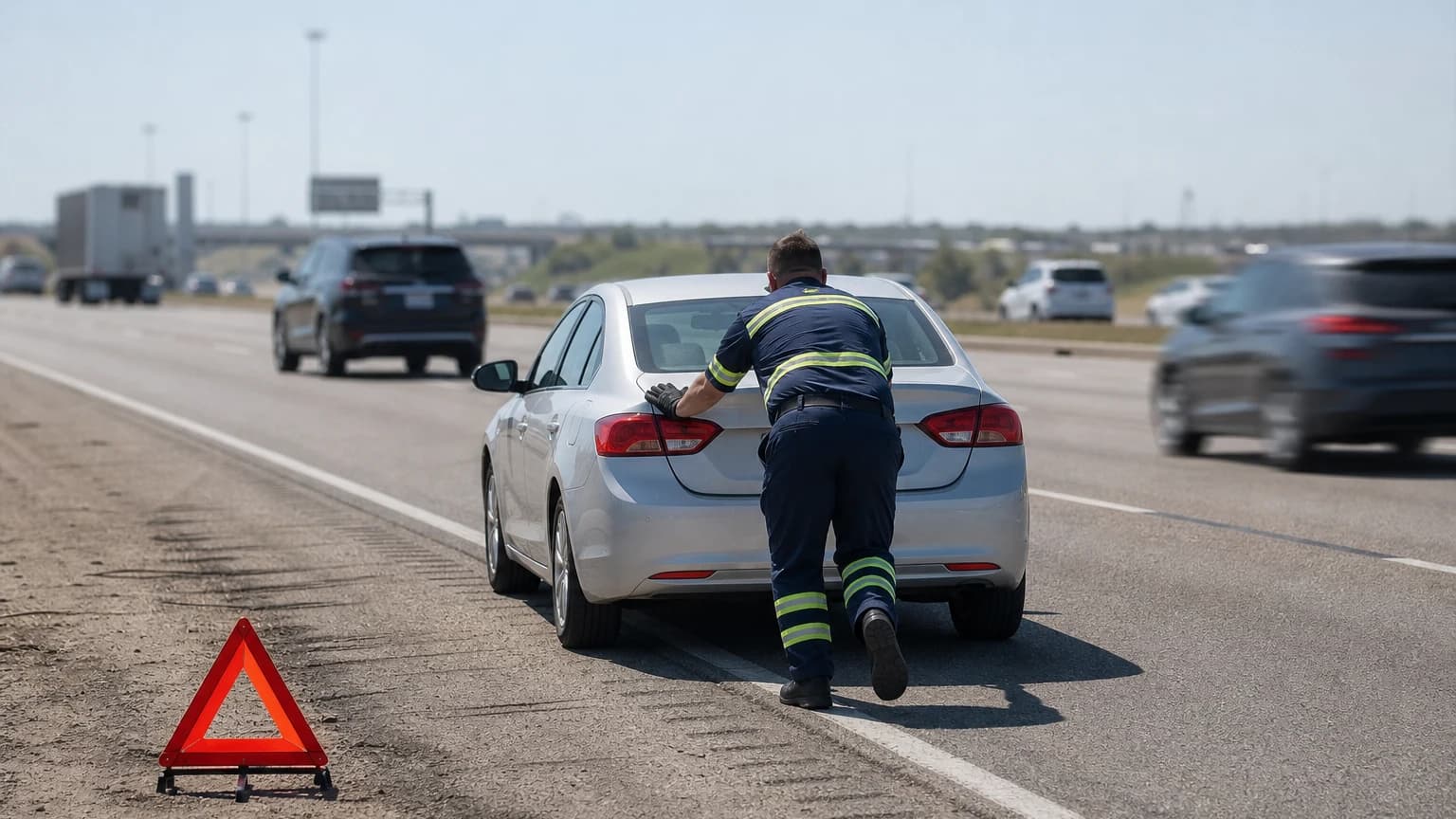
A car stalled in Dallas traffic during the evening I-35E or LBJ Freeway crawl is dangerous because it happens surrounded by cars still moving at highway speed while your own car has lost power. Texas Tows Inc. has dispatched tow trucks across Dallas-Fort Worth since 2015, and our drivers see the same pattern again and again: the drivers who get clear safely are the ones who act in the first few seconds, before traffic behind them has time to react.
Car Stalled in Dallas Traffic: What to Do Step by Step
If your engine dies or your car suddenly loses power in traffic, move through these steps in order:
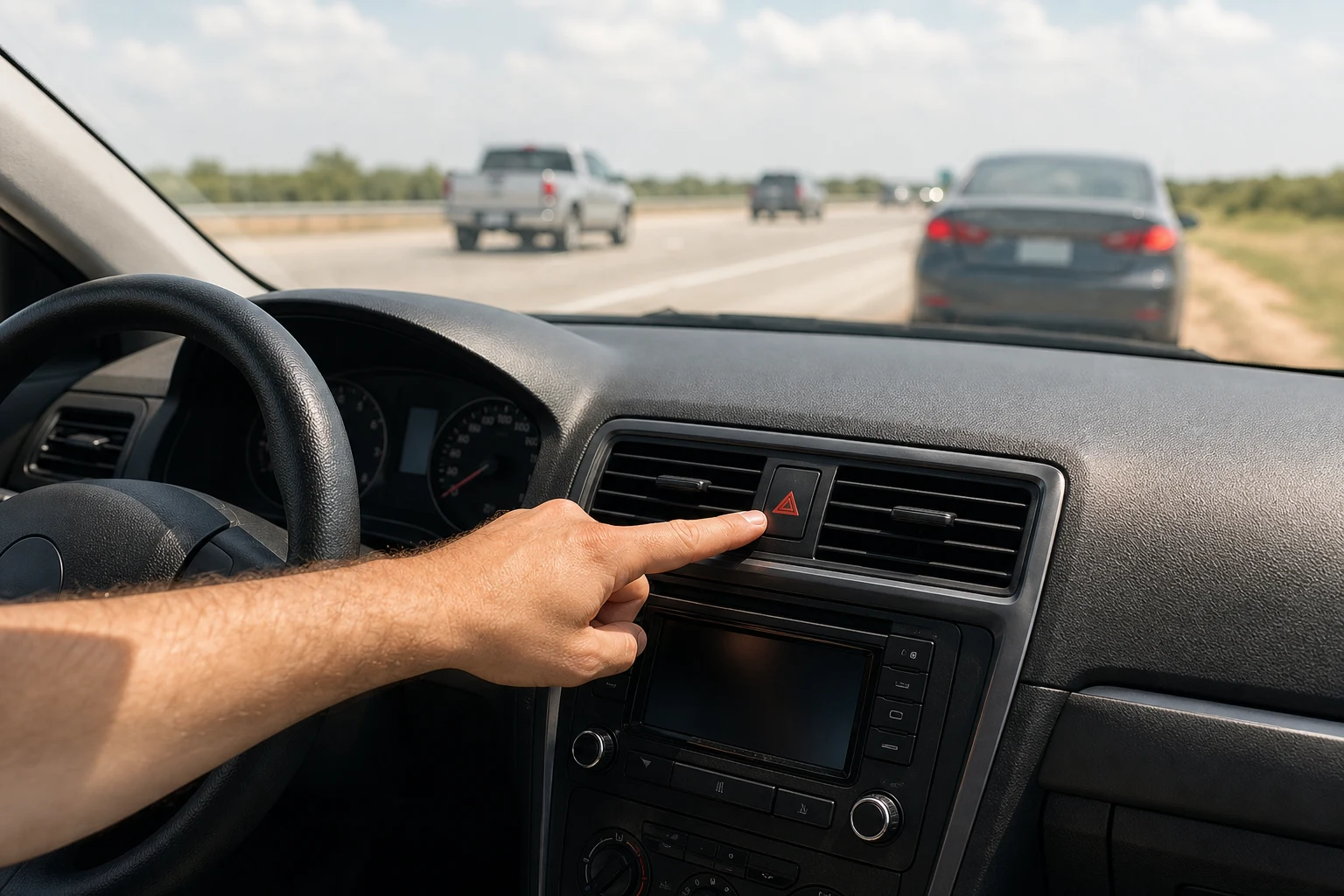
- Turn on your hazard lights immediately. Do this before you even know why the car stopped. It's the single fastest way to warn the drivers behind you that something is wrong.
- Try to coast toward the shoulder or an exit. Even with the engine off, you usually still have enough momentum and steering control for a few seconds. Aim for the shoulder or the nearest exit ramp rather than trying to restart the car where you are.
- Shift into park and set the parking brake once you've reached the shoulder, then keep your seatbelt on.
- Stay inside the vehicle if you're safely out of a travel lane. Getting out next to live traffic is riskier than waiting inside with your hazards on, unless you smell fuel, see smoke, or the car has been struck.
- Call for help once you're stopped. If you're still partly in a lane and can't move, call 911 first; if you've reached the shoulder, call Texas Tows at (817) 512-1024 for towing right away.
Why Cars Stall More Often in Dallas Rush-Hour Traffic
Stop-and-go traffic is harder on a vehicle than most drivers realize. An engine idling through a long backup on the Dallas North Tollway or George Bush Turnpike runs hot for extended stretches without the steady airflow it gets at highway speed, which pushes a marginal cooling system, battery, or alternator past the point it can compensate. A fuel pump that's starting to fail often shows its first symptoms here, cutting out under the load of repeated stop-and-start acceleration instead of during steady cruising.
Our drivers also see a seasonal pattern across Dallas-Fort Worth: stall calls climb during the hottest summer stretches, when extreme heat strains cooling systems and batteries at the same time traffic is heaviest, and again during the first real cold snaps, when a weak battery that survived all summer gives out. Either way, the failure tends to show up in traffic before it would on an open road.
What Not to Do If Your Car Stalls in Traffic
- Don't sit still in a live lane trying to restart the engine. Every second you spend stationary in traffic increases the odds of being struck from behind.
- Don't get out next to moving traffic. If you're still partly in a travel lane, staying buckled inside is usually safer than standing beside the car.
- Don't wave other drivers around you or try to direct traffic yourself. Let your hazards do the warning and wait for help or law enforcement.
- Don't leave the vehicle unattended on the shoulder for long. Texas DPS and TxDOT courtesy patrols can flag an unattended car for removal, so call for a tow as soon as you're safely stopped rather than waiting to see if it restarts on its own.
Getting Back on the Road After a Stall
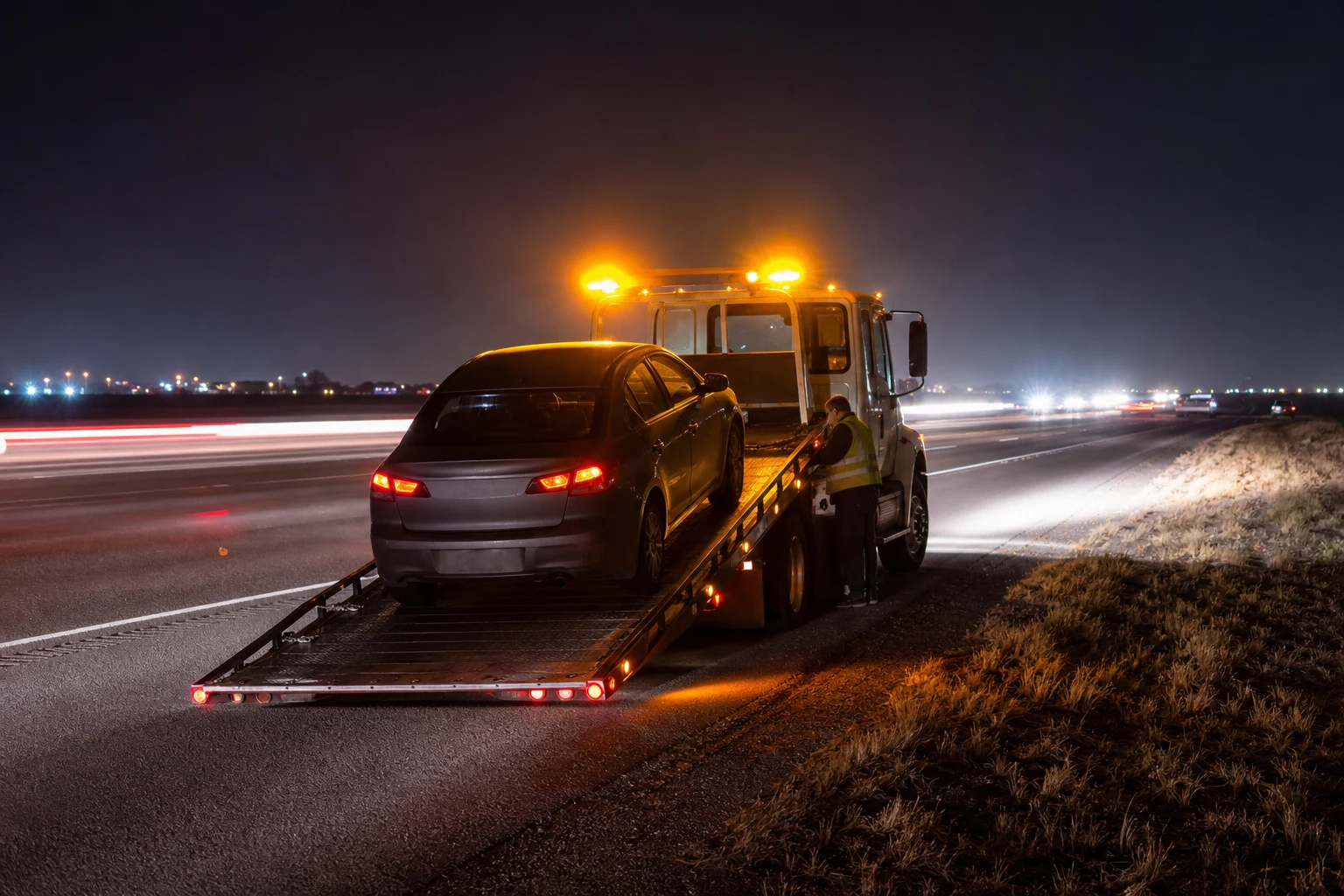
Once you're safely on the shoulder, resist the urge to keep cranking the engine. Repeated restart attempts can drain an already weak battery, flood a fuel-injected engine, or mask a bigger problem, like a slipping serpentine belt or a failing fuel pump, that a jump or a quick restart won't fix. Our dispatchers field stall calls at every hour across I-35E, I-30, I-20, LBJ Freeway, the George Bush Turnpike, and the Dallas North Tollway, from Irving and Arlington to Plano and Fort Worth, and we send the right type of tow for the situation rather than guessing. If the stall followed overheating rather than an electrical issue, our guide to what to do when your car overheats in Dallas covers the warning signs worth watching for next time. And if a dead battery turns out to be the culprit, our dead battery guide walks through what we check before recommending a jump versus a tow.
If your stall happened because of a collision rather than a mechanical failure, our accident scene safety guide covers the same shoulder-safety basics with a few extra steps specific to a crash.
FAQs About a Car Stalling in Dallas Traffic
What's the first thing I should do if my car stalls in Dallas traffic?
Turn on your hazard lights immediately, even before you know why the car stopped. Then try to coast toward the shoulder or the nearest exit using your remaining momentum and power steering. Only attempt a restart once you're safely out of a live travel lane, not while you're sitting in it.
Should I get out of my car if it stalls on a Dallas highway?
It depends on where you stop. If you're able to reach the paved shoulder, staying inside with your seatbelt on is usually safer than standing next to traffic, unless you smell fuel, see smoke, or fear being struck. If you're stuck in a live lane and can't move the car, get out on the side away from traffic and move behind a guardrail or well off the roadway if you can do so safely.
Is it legal to leave a stalled car on a Dallas freeway shoulder?
Yes, briefly, while you arrange a tow, but Texas law doesn't allow an inoperable vehicle to sit indefinitely on a highway shoulder. DPS troopers and TxDOT courtesy patrols can flag an abandoned-looking vehicle for removal, so it's worth calling for a tow as soon as you're safely stopped rather than waiting.
Why do cars stall more often in heavy Dallas traffic?
Stop-and-go traffic puts extra strain on a car's cooling, electrical, and fuel delivery systems all at once, since the engine runs for long stretches without the airflow a moving vehicle normally gets. A marginal battery, a failing fuel pump, or a cooling system already low on fluid is far more likely to give out during a Dallas rush-hour crawl on I-35E or LBJ Freeway than on an open road.
Will Texas Tows tow my car if it stalls in the middle of traffic?
Yes. We dispatch flatbed and wheel-lift trucks across Dallas-Fort Worth 24/7 for exactly this situation. Call as soon as you're stopped, even if you're still working with law enforcement or a courtesy patrol on the scene, so your tow is already on the way once the car is cleared to move.
Stalled in Dallas-Fort Worth Traffic? Call Texas Tows 24/7
A stalled car in the middle of traffic is stressful enough without also wondering how it's going to get off the road. Our towing service and roadside assistance teams dispatch flatbed and wheel-lift trucks anywhere across Dallas-Fort Worth, day or night.
Call (817) 512-1024 for 24/7 emergency towing in Dallas-Fort Worth. We're TDLR-licensed (VSF #0654316VSF) and have handled DFW traffic recoveries since 2015, so you're calling a crew that's seen this exact situation before.
