

The minutes right after a collision are the most dangerous part of the whole event. Accident scene safety Dallas guidance exists because stopped or slow-moving vehicles on I-35E, I-30, US-75, or LBJ Freeway create a real risk of a second, often worse, crash. What you do in the first few minutes—before police, EMS, or a tow truck arrive—affects whether everyone involved stays safe and whether the claim gets resolved cleanly afterward.
Texas Tows has responded to DFW crash scenes since 2015. Our TDLR-licensed drivers see the same pattern again and again: people get hurt or a second collision happens not during the original impact, but while someone is standing in a live lane, arguing in the roadway, or trying to move a vehicle that should have been left alone. This guide covers what to do, what to avoid, and when to call for help.
The First 60 Seconds After a Crash in Dallas
Turn on your hazard lights the moment you realize a collision has happened, even before you have assessed anything else. Hazards are the single fastest way to warn approaching drivers on a fast-moving Dallas freeway or a dark Fort Worth surface street.
- If the vehicle runs and steers normally and no one appears seriously hurt, move it out of the travel lane—onto the shoulder, to the nearest exit ramp, or into a nearby lot in Irving, Arlington, or Plano.
- If the vehicle cannot be moved, or moving it would put someone in more danger, leave it where it is and get any uninjured occupants behind the guardrail or well off the roadway instead.
- Never stand behind your vehicle or in the lane to inspect damage. Do that from the shoulder, facing traffic when possible.
The National Highway Traffic Safety Administration's roadway safety guidance makes the same point: a disabled vehicle in a live lane is far more dangerous to the people around it than the original collision often was.
Check for Injuries and Call 911 When Needed
Once you and your passengers are out of the traffic lanes, check for injuries before checking on vehicle damage. Call 911 immediately if anyone is hurt, unconscious, trapped, or unsure whether they are injured— some injuries, especially neck and back injuries, are not obvious right away. Also call 911 if the crash blocks a travel lane on a Dallas freeway, involves a commercial vehicle, or includes a fire, fuel leak, or smoke.
Texas Transportation Code Chapter 550 requires a driver to report a crash that involves injury, death, or apparent property damage of $1,000 or more. In practice, that covers nearly every collision on a DFW highway. Even for a minor parking-lot bump, calling gets an officer's crash report on record, which both insurers will want later.
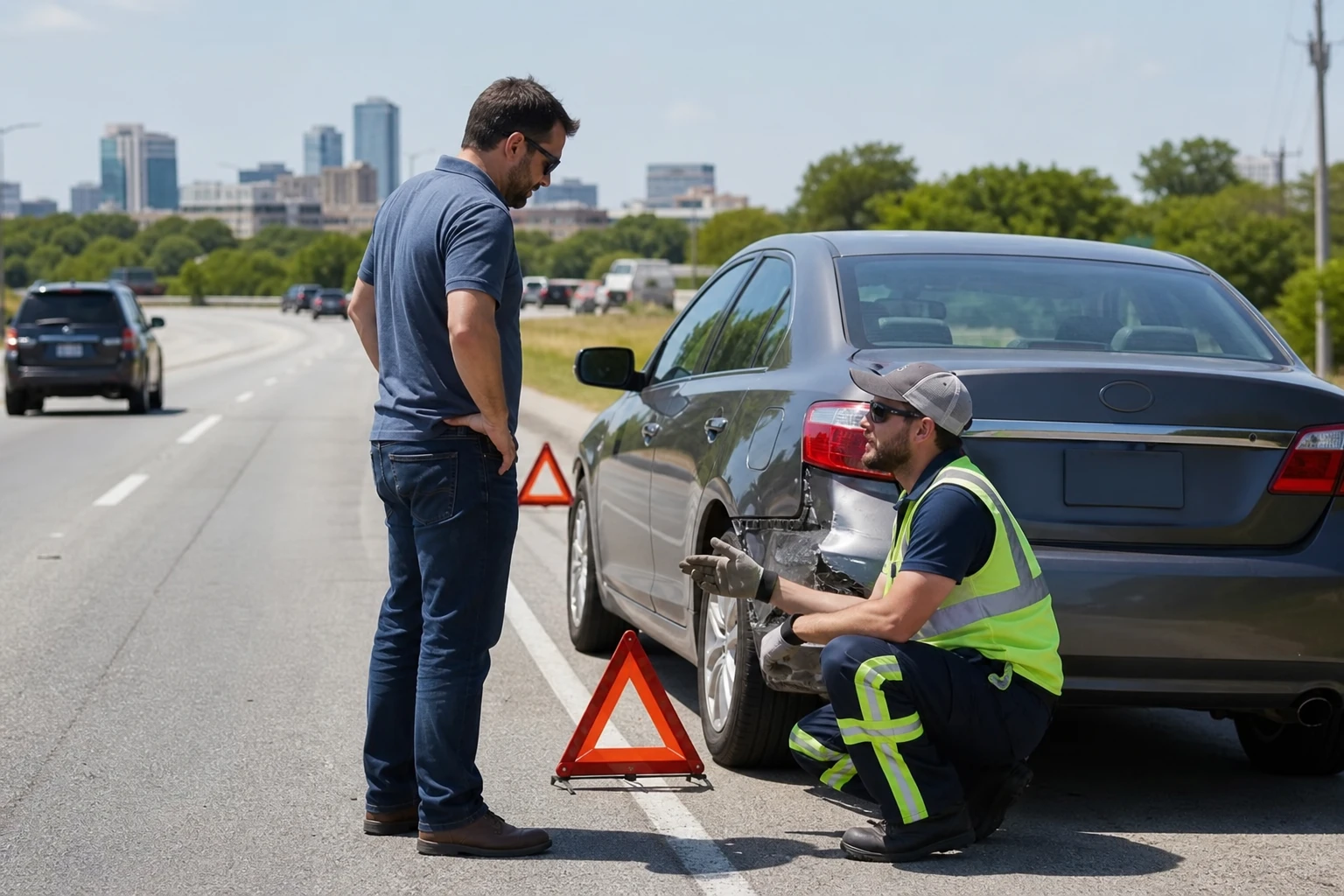
Accident Scene Safety Dallas: What to Check Before You Move
Before you get back in a damaged vehicle or attempt to drive away, do a quick safety check. Look for fluid leaking under the vehicle, a tire that looks flat or shredded, a hood or trunk that will not latch, headlights or taillights that no longer work, or steering and braking that feel different than normal. Any of those is a sign the vehicle should not be driven, even a short distance to a nearby lot in Arlington or downtown Dallas.
If you are unsure whether the vehicle is safe to drive, treat it as unsafe and wait for police or a tow. Driving a vehicle with a compromised tire, a leaking fluid line, or damaged steering onto US-75 or the George Bush Turnpike can turn a fender-bender into a second, more serious crash a few miles down the road.
Document the Scene: Photos, Information, and the Crash Report
Once everyone is safe, document the scene before vehicles are moved for towing or repair. Photograph both vehicles from several angles, the license plates, the point of impact, skid marks, road signage, and the surrounding area, including cross streets or the nearest mile marker. That documentation matters far more than memory once an insurance adjuster is involved weeks later.
Exchange the other driver's name, phone number, insurance company and policy number, driver's license number, and license plate. Note the exact location, direction of travel, and time. If police respond, get the responding officer's name and the case or report number—Dallas, Fort Worth, Irving, Arlington, and Plano police departments can each provide a copy of the report once it is filed.
What Not to Do at a DFW Accident Scene
A few common instincts after a crash actually make the scene more dangerous. Avoid these:
- Don't stand in a travel lane to argue, exchange information, or inspect damage—move the conversation to the shoulder or a nearby lot.
- Don't leave a drivable vehicle sitting in a live lane on I-35E, I-30, or LBJ Freeway when it could be moved safely to the shoulder.
- Don't attempt roadside repairs, such as changing a tire, next to fast-moving traffic. Wait for a safe location or call for help.
- Don't admit fault or speculate about cause at the scene. Stick to facts when speaking with police and your insurer.
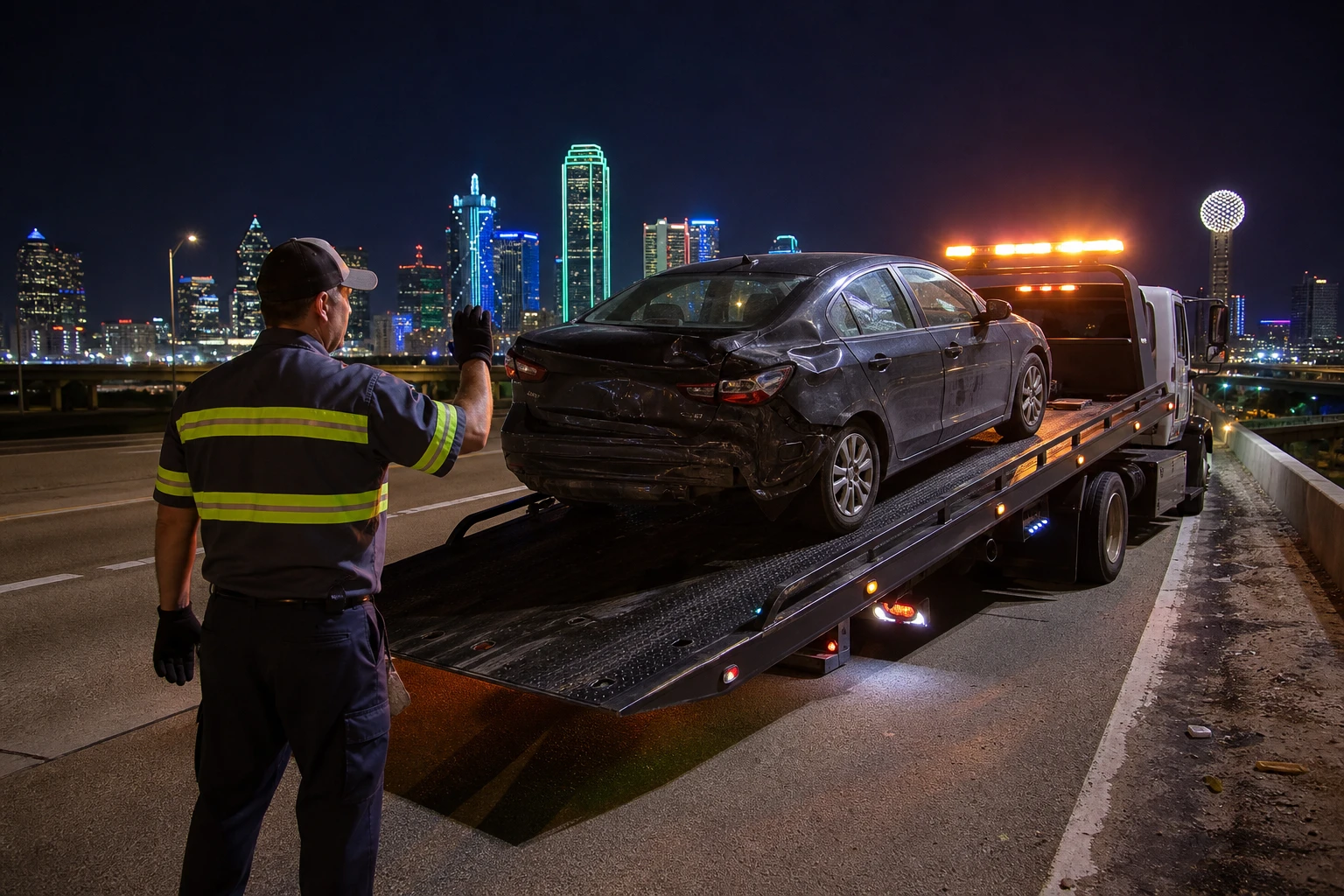
When You Need Towing or Roadside Help After the Crash
Many collisions leave a vehicle safe for occupants but not safe to drive. A bent wheel, a leaking radiator, a jammed door, or a deployed airbag can all mean the car needs to come off the road on a flatbed rather than be driven to a shop. Our accident recovery towing service handles exactly this situation—clearing a damaged vehicle from a Dallas freeway shoulder or side street quickly so it is not sitting in a dangerous spot longer than necessary.
If the crash left you stuck without a flat tire, dead battery, or fuel emergency instead of major damage, our roadside assistance team may be able to get you moving again at the scene. For anything that needs to be transported to a repair shop, body shop, or your home, Texas Tows' Dallas towing service operates 24/7 across Dallas, Fort Worth, Irving, Arlington, and Plano. If you are still working through what happened after the collision itself, our guide on what to do after a car accident in Dallas covers the steps that follow once the scene is safe.
FAQs About Accident Scene Safety in Dallas
What should I do immediately after a car accident in Dallas?
Stay calm, check yourself and passengers for injuries, and get out of moving traffic if the vehicle can be moved safely. Turn on hazard lights, call 911 if there is an injury, fire, or blocked lane, and move to the shoulder or a nearby parking lot rather than standing near the travel lanes.
Do I have to call the police after a minor accident in Texas?
Texas Transportation Code Chapter 550 requires drivers to report a crash involving injury, death, or apparent property damage of $1,000 or more. Even for a minor fender-bender below that threshold, a responding officer's crash report can help resolve insurance disputes, so calling is usually the safer choice.
Is it safe to move my car after an accident on a Dallas highway?
If the vehicle is drivable and no one is seriously injured, Texas law and most DFW police departments want you to move it out of the travel lane onto the shoulder or nearest exit ramp. Leaving a drivable vehicle in a live lane on I-35E, I-30, or LBJ Freeway creates a serious secondary-crash risk.
What information should I exchange at the accident scene?
Collect the other driver's name, phone number, insurance company and policy number, driver's license number, and license plate. Photograph both vehicles, the plates, the surrounding scene, and any visible damage before vehicles are moved for tow or repair, and note the exact location, direction of travel, and time.
Stay Safe—and Call Texas Tows If You Need a Tow
Good accident scene safety Dallas habits come down to a short list: hazards on, get out of the travel lane, check for injuries, call 911 when needed, and document everything before vehicles are moved. Those steps protect everyone involved and make the insurance process far less stressful afterward.
If your vehicle cannot be safely driven after a crash anywhere in Dallas-Fort Worth, call Texas Tows at (817) 512-1024. Share your exact location, direction of travel, and vehicle condition, and our licensed, insured drivers will get you and your vehicle off the road safely.
