

A car maintenance road trip Texas inspection can prevent a small issue in your Dallas driveway from becoming a dangerous stop on I-35E, I-20, US-75, or a remote stretch between cities. North Texas heat works the battery and cooling system hard, while a fully loaded vehicle adds demand to tires and brakes. The right time to find a weak tire, aging battery, fluid leak, or overdue service is before your luggage and passengers are onboard.
Texas Tows has helped DFW drivers manage roadside failures since 2015. Our TDLR-licensed team sees what happens when ordinary maintenance problems meet highway speed, summer temperatures, and long distances. This checklist does not replace your owner's manual or a qualified inspection. It helps you identify what to check, what information to gather, and when to postpone the trip until a professional can evaluate the vehicle.
Car Maintenance Road Trip Texas: Start Several Days Early
Do the full inspection several days before departure, not the night before. If a tire is damaged, the battery tests weak, a warning light appears, or scheduled service is overdue, you need time to book a repair and confirm the result. Begin with the maintenance schedule in the owner's manual and review recent service records rather than guessing from mileage alone.
- Check the dashboard for warning lights and investigate any that remain on after startup. Do not clear a warning simply to begin the trip.
- Look under the parked vehicle for fresh fluid spots and note their color, location, and whether the level changes.
- Confirm oil changes, tire rotations, brake service, and other scheduled items against the manufacturer's time and mileage intervals.
- Make sure the registration, insurance information, roadside contacts, and destination details are available without relying on one phone.
Plan for the actual route. A drive from Plano through Dallas and Fort Worth can involve stop-and-go congestion, construction, toll roads, and long periods on high-speed interstates. A trip south on I-35E or west beyond Weatherford may put more distance between services. Check the weather and current road conditions through DriveTexas before departure, then build in fuel and rest stops instead of waiting for a warning light.
Inspect Every Tire, Including the Spare
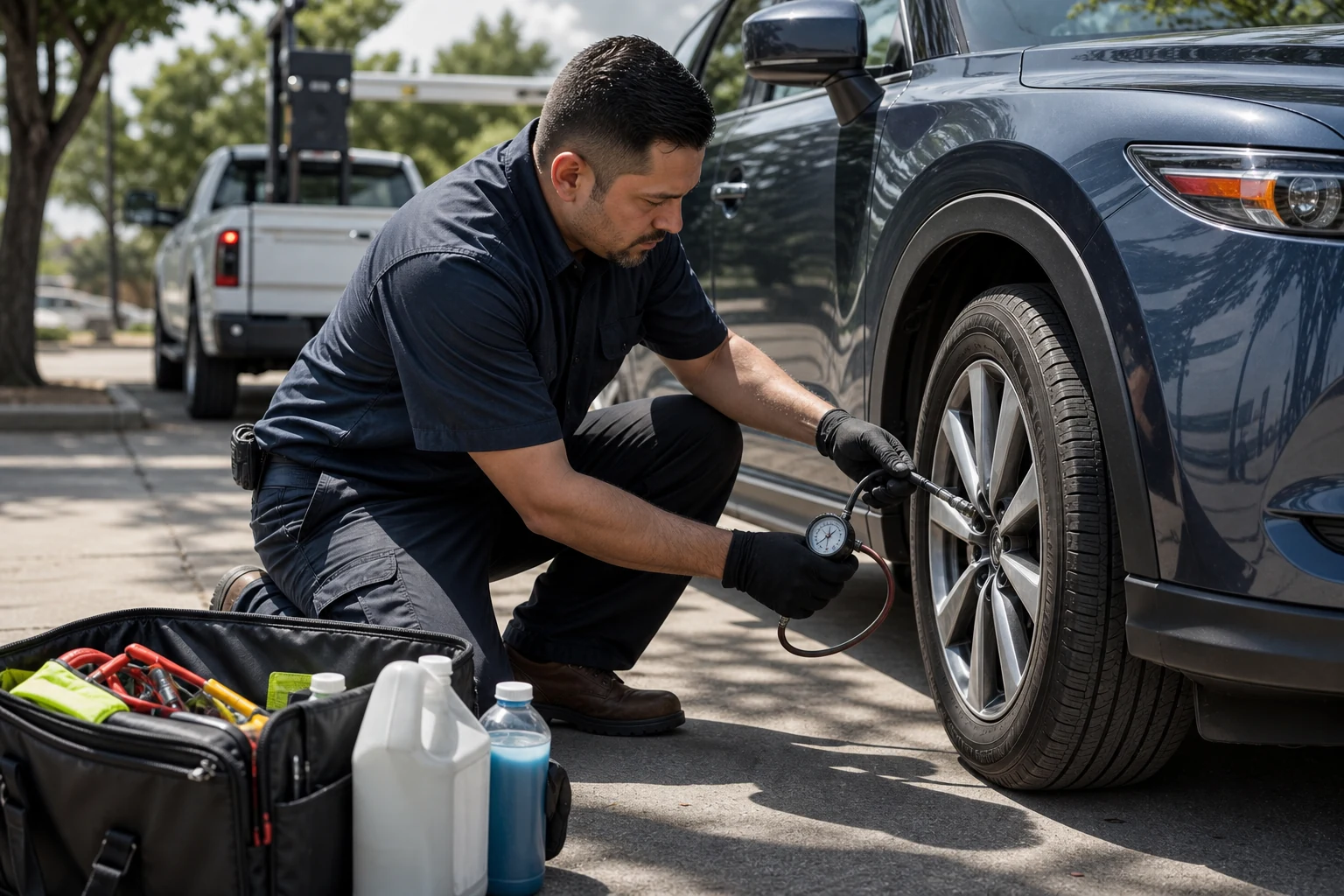
Tires carry the full load and are one of the most important pre-trip checks. Measure pressure when the tires are cold and compare it with the placard on the driver's door jamb—not the maximum number molded into the tire sidewall. Check all four tires and the spare. A dashboard pressure warning is useful, but it is not a substitute for a gauge and visual inspection.
Look across the tread for uneven wear, embedded objects, cuts, cracks, exposed cords, or sidewall bulges. Verify that the tread has adequate depth and that no tire loses pressure repeatedly. The National Highway Traffic Safety Administration's tire safety guidance recommends regular pressure and condition checks. If you see structural damage or cannot explain a pressure loss, have the tire inspected before driving at highway speed.
Confirm the spare, jack, wheel-lock key, and lug wrench are present and fit the vehicle. If your car uses an inflator kit instead of a spare, check its expiration date and limitations. Never plan to change a tire beside fast traffic when the vehicle cannot get to a safe work area. Texas Tows provides roadside assistance and can arrange towing when a roadside tire change is unsafe or the spare is unusable.
Check Fluids and the Cooling System Safely
Follow the owner's manual for checking engine oil, coolant, brake fluid, transmission fluid when applicable, power-steering fluid when applicable, and windshield washer fluid. Park on level ground and use the specified procedure. Never open a radiator cap or pressurized cooling system while the engine is hot. Hot coolant can cause severe burns.
A low level may be a symptom, not the whole problem. Repeated coolant loss, an overheating history, a sweet odor, visible steam, or a fresh puddle needs diagnosis before a long drive. The same applies to oil or brake-fluid loss. Topping off a leaking system does not make the vehicle road-trip ready.
DFW's normal summer high temperatures reach the mid-90s, according to the National Weather Service's Dallas/Fort Worth temperature records. That heat can expose a marginal cooling system in traffic around Arlington, Irving, or downtown Dallas. If the temperature gauge rises unexpectedly, the warning light appears, or steam is visible, stop in the safest available place and shut the vehicle down according to the owner's manual. Our guide to what to do when a car overheats in Dallas covers the immediate safety steps.
Test the Battery and Inspect Belts and Hoses
A battery can start the car normally and still have limited reserve. If it is aging, cranks slowly, has required repeated battery attention, or shows corrosion or a swollen case, arrange a professional battery and charging-system test. Secure loose items near the battery and never place tools across terminals.
With the engine off and cool, look for visibly cracked, glazed, frayed, or loose belts and for hoses that appear cracked, swollen, leaking, or badly softened. Do not reach around moving belts or fans, and remember that some electric cooling fans can start automatically. Any concern should be evaluated by a qualified technician before departure.
If your car will not start on departure day, avoid repeated cranking that drains the battery further. Review our guide to a dead battery in Dallas and call for help if you cannot confirm a safe battery-service procedure for the specific vehicle.
Confirm Brakes, Lights, Wipers, and Visibility
Listen for grinding, scraping, or new squealing and pay attention to a soft pedal, pulling, vibration, or increased stopping distance. Those symptoms should be professionally inspected before a road trip. A loaded vehicle and highway traffic leave less margin for a brake problem.
Test low and high beams, brake lights, turn signals, hazards, reverse lights, and license-plate illumination with another person when possible. Replace worn wiper blades, fill washer fluid, and clean the glass inside and out. Verify that mirrors and driver-assistance sensors are clean and unobstructed, but do not treat driver-assistance features as a substitute for attention.
Run the air conditioning before the trip, especially when traveling with children, older adults, or pets. A cooling problem in Dallas is more than a comfort issue when the vehicle becomes disabled in summer heat. Pack water for people separately from any fluid intended for the vehicle.
Pack a Practical Texas Roadside Emergency Kit
A useful kit supports visibility, communication, and a safe wait. Pack a charged power bank, flashlight, reflective triangles, first-aid supplies, drinking water, basic weather protection, work gloves, and the tools the vehicle manufacturer provides. Add medications and passenger-specific needs. Keep heavy items secured so they cannot become projectiles during hard braking.
Download the route or carry a paper backup for areas with weak service. Tell someone the route and expected arrival time. Save Texas Tows' phone number, but also write it down: (817) 512-1024. If you drive an EV, map charging stops with alternatives and consult the manufacturer's towing instructions. If an EV must be moved, our flatbed towing service can help protect vehicles that require all wheels off the road.
If the Car Breaks Down After You Leave DFW
Even careful preparation cannot prevent every failure. If the vehicle loses power, signal early and move as far from moving traffic as it can safely go. Turn on hazards. Do not stop in a travel lane merely to protect a tire or mechanical component; life safety comes first. If there is a collision, injury, fire, smoke, fuel odor, or immediate traffic threat, call 911.
- Identify the highway, direction of travel, nearest exit or mile marker, and a visible landmark. A map pin helps, but plain-language location details reduce confusion on divided roads.
- Describe the year, make, model, symptoms, warning lights, tire condition, passenger needs, and whether the vehicle can steer, roll, or shift.
- Stay away from moving traffic. Do not stand behind the car, crawl beneath it, or attempt a repair beside a live lane.
- Use only a verified service provider and confirm the destination before loading begins.
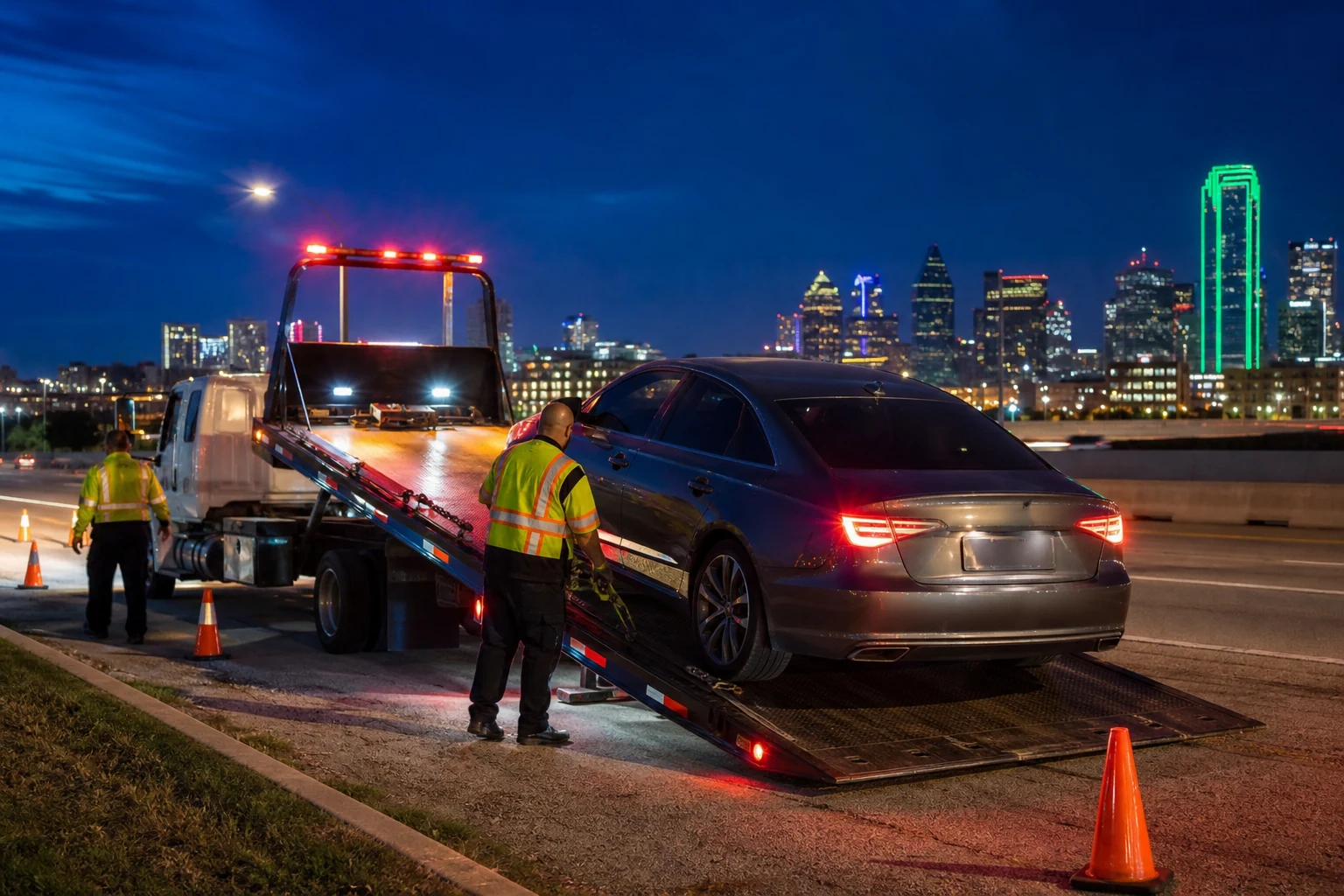
Texas Tows operates 24/7 across Dallas-Fort Worth with licensed, insured towing professionals. Our Dallas towing service can move a vehicle that is not safe to drive, while roadside assistance may resolve a qualifying battery, tire, lockout, or fuel problem at the scene.
FAQs About Texas Road-Trip Car Maintenance
How far in advance should I inspect my car before a Texas road trip?
Start at least several days before departure. That leaves time to schedule a qualified technician if you find worn tires, a weak battery, a leak, a warning light, or overdue maintenance. Recheck tire pressure, lights, fuel, and packed emergency supplies on departure day.
What tire checks matter most before a long drive from Dallas?
Check cold tire pressure against the vehicle placard, inspect tread and sidewalls, verify the spare is usable, and confirm the jack and lug-wrench kit is complete. Do not rely only on the dashboard warning light, and replace or professionally inspect any tire with damage, bulges, cords, or persistent pressure loss.
Should I top off coolant before a summer road trip?
Only check or add coolant according to the owner’s manual and only when the engine is completely cool. Never open a hot cooling system. A low level, repeated loss, overheating history, or visible leak needs professional diagnosis before a long trip rather than repeated topping off.
What should I do if my car breaks down on a Texas highway?
Move as far from traffic as the vehicle can safely travel, turn on hazard lights, and call 911 first if there is a crash, injury, fire, smoke, fuel odor, or immediate traffic danger. Share your highway, direction, exit or mile marker, vehicle details, symptoms, and safe callback number with roadside dispatch.
Road-Trip Ready—or Need Roadside Help?
Give yourself enough time to correct problems before leaving Dallas. Check tires, fluids, battery, brakes, lights, visibility, air conditioning, and emergency supplies, then compare the vehicle with its manufacturer's maintenance schedule. Postpone the trip when a warning light, leak, damaged tire, overheating problem, or unsafe brake symptom has not been resolved.
If your vehicle still breaks down in DFW, Texas Tows is available day or night. Call (817) 512-1024 and share your exact location, vehicle details, symptoms, passenger needs, and preferred destination. We will help determine whether roadside service or professional towing is the safer next step.
