
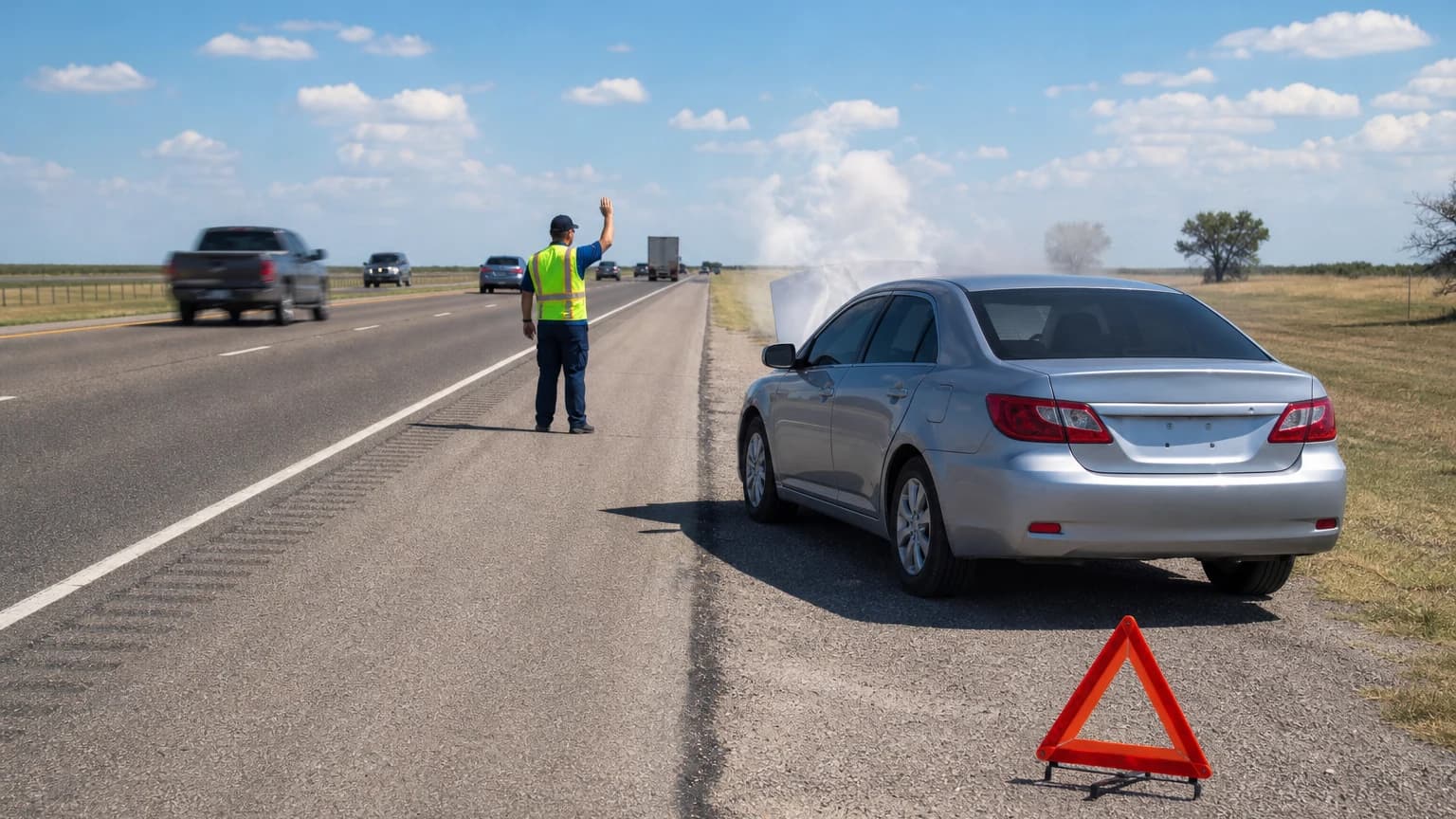
Smoke curling out from under the hood while you're doing 70 on I-35E is one of the more unsettling things that can happen behind the wheel. A car fire on a Dallas highway can go from a thin wisp of smoke to visible flames in under a minute, and what you do in that first minute matters more than anything the fire department does after it arrives. Texas Tows Inc. has dispatched flatbed tow trucks to DFW highway shoulders since 2015, and our drivers have rolled up on more than a few scenes where a driver's fast, calm response kept a bad situation from getting worse.
Car Fire on a Dallas Highway: Step-by-Step Safety Response
Every second counts once you see smoke, so move through these steps without stopping to debate them:
- Signal and move to the shoulder. Get out of the travel lanes and onto the widest, flattest part of the shoulder you can reach, ideally paved rather than grass. Don't stop in a live lane because the shoulder looks narrow.
- Shift to park, kill the engine, and hit the hazards. Cutting the engine cuts off the fuel and electrical feed that can make a small fire worse, and your hazards warn approaching traffic that something is wrong.
- Get everyone out and away from the vehicle. Move at least 100 feet from the car, further if you smell fuel or hear hissing or popping. Don't stand between your car and moving traffic; get onto the grass or behind a barrier if one is nearby.
- Call 911 immediately, even if all you see is smoke. Engine fires can go from smoke to flame in seconds, and DFW's fire departments would rather respond to a fire that burns itself out than arrive after it's spread to the fuel tank.
- Leave your belongings inside. Once you're clear, don't go back for a phone, a bag, or anything else. A fire that looks contained under the hood can flash faster than it looks like it will from the shoulder.
Why Vehicle Fires Happen More Often Than You'd Think
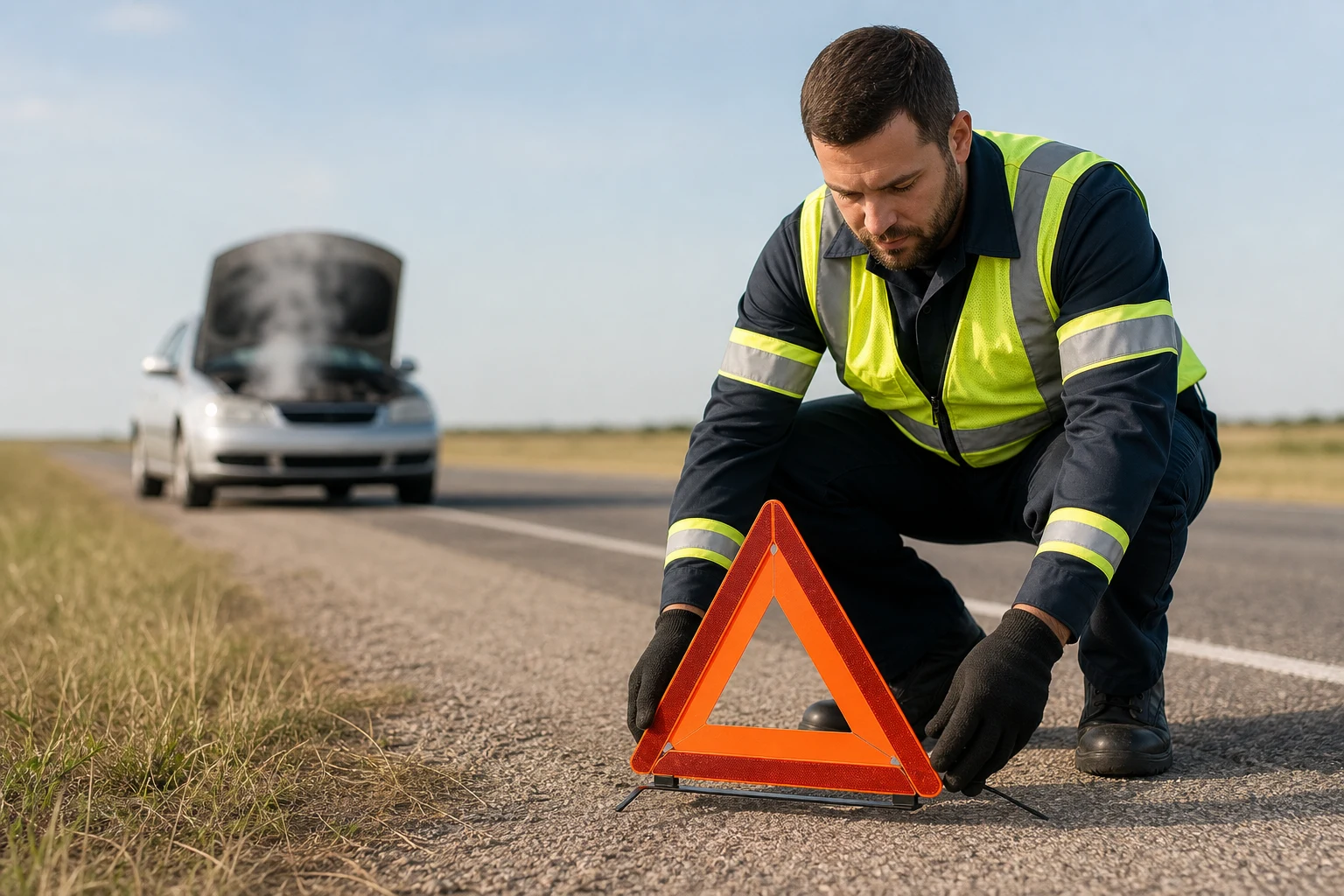
Most highway vehicle fires aren't the result of a crash at all. Fire research consistently points to mechanical and electrical failure as the leading cause: a worn wiring harness that shorts against a metal bracket, a fluid leak dripping onto a hot exhaust manifold, or an aftermarket electrical accessory installed without the right fuse protection. Our techs see the aftermath of all three regularly across Dallas, Fort Worth, and the surrounding suburbs.
Texas adds one wrinkle that drivers outside the state don't always think about: dry grass. A catalytic converter can run hot enough to ignite dry vegetation on contact, and DFW medians and shoulders turn tinder-dry during a typical Dallas County or Tarrant County summer, especially in years when local burn bans are in effect. If your dash lights up or you catch a burning smell, pulling onto a paved shoulder instead of a grassy one is worth the extra few seconds it takes to find one.
Reduce Your Risk: Fire Prevention Habits for DFW Drivers
Most of the fire calls our dispatch takes trace back to a warning sign the driver noticed and put off dealing with. A few habits catch most of the risk before it turns into a highway emergency:
- Don't ignore a burning smell, even a faint one that clears up after a minute. Oil or coolant dripping onto a hot exhaust manifold often announces itself this way before it ever produces visible smoke.
- Get recall notices handled promptly. Several major automaker recalls over the past decade have involved fire-risk defects in wiring or fuel components. A free recall repair takes an hour; a highway fire doesn't.
- Have aftermarket electrical work done by someone who fuses it correctly. Stereo systems, lighting upgrades, and towing wiring installed without proper fuse protection are a recurring cause of the electrical fires our crews see.
- Check hoses and belts during Texas heat season. DFW summers are hard on rubber components, and a cracked hose leaking fluid onto a hot engine is one of the more preventable fire causes we come across.
What Not to Do During a Car Fire
- Don't open the hood to look at the engine. Fresh oxygen can cause a smoldering fire to flare up in your face.
- Don't try to reach the next exit once you see actual flames rather than smoke. A car fire can spread to the fuel system faster than you can drive another quarter mile.
- Don't rely on a fire extinguisher for a fire that's already spread. A small dashboard extinguisher can knock out a fire that's still small, but it's not built for a fire that's already reached the engine bay or the tires.
- Don't stand between the vehicle and traffic while waiting for help. Position yourself on the far side of a guardrail or well off the paved shoulder whenever the roadway allows it.
After the Fire: Getting Your Vehicle Off the Highway
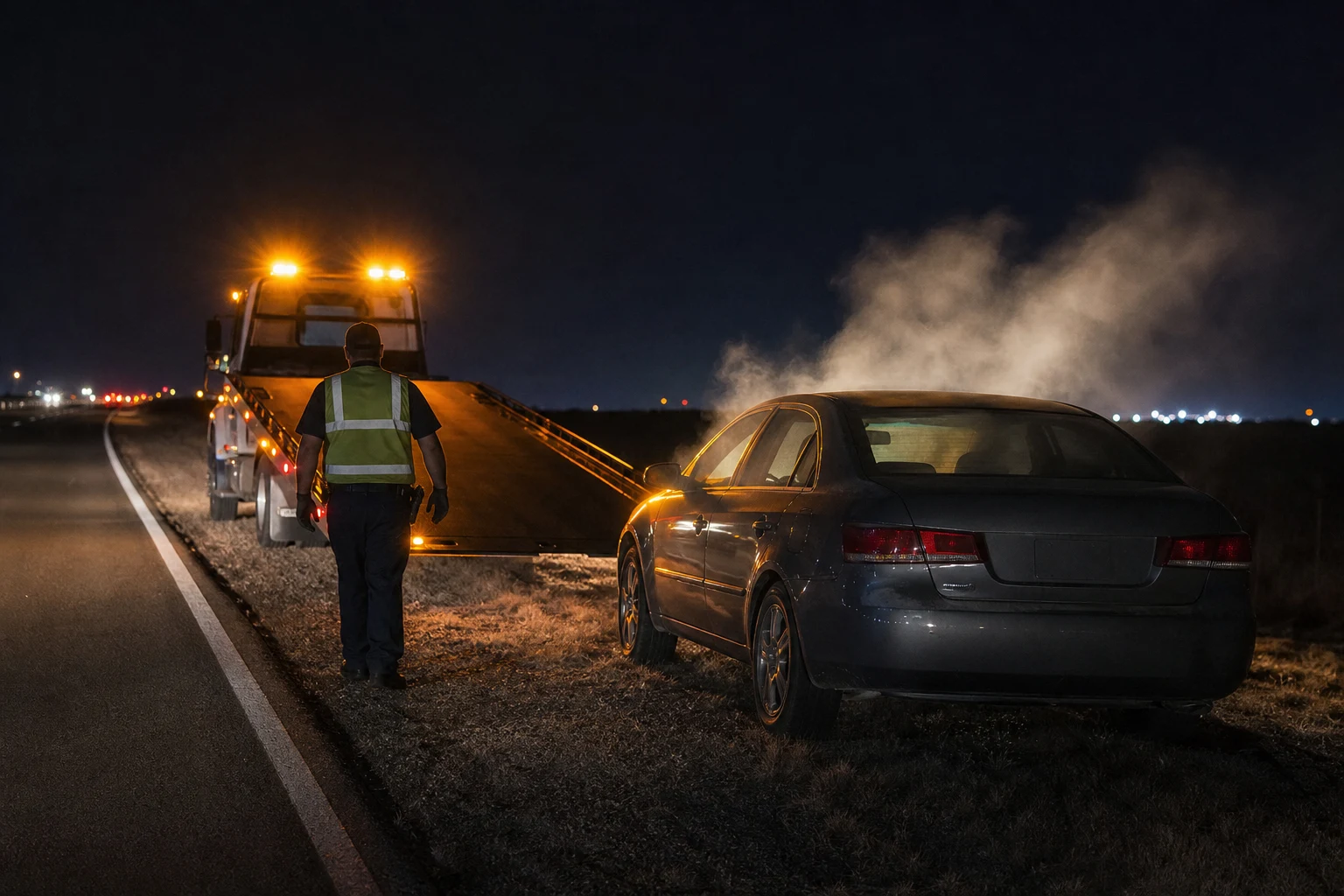
Once the fire department has confirmed the scene is safe and released your vehicle, it still has to come off the shoulder, and it isn't going anywhere under its own power. Our dispatchers field these calls at every hour of the night across I-35E, I-30, I-20, LBJ Freeway, the George Bush Turnpike, and the Dallas North Tollway, from Irving and Arlington to Plano and Fort Worth. We send a flatbed rather than a wheel-lift tow for a fire-damaged vehicle, since heat can compromise brake lines, tires, and wiring in ways you can't see just by looking at the outside of the car. If the fire followed an overheating engine rather than a wiring issue, our guide to what to do when your car overheats in Dallas covers the warning signs worth knowing before it gets to that point. And if you're dealing with any kind of roadside breakdown, not just a fire, our general breakdown safety guide walks through the same shoulder-safety basics.
Keep the police or fire department incident number, along with any photos taken from a safe distance, for your insurance claim. Comprehensive coverage usually applies to non-collision vehicle fires, though every policy reads a little differently, so it's worth a call to your adjuster as soon as things settle down. We can provide a copy of our tow and storage paperwork if your insurer needs documentation of when and how the vehicle was recovered.
FAQs About Car Fires on Dallas Highways
Should I try to put out a car fire myself?
Only if the fire is still small and hasn't grown past the first few seconds, and you happen to have a rated fire extinguisher within reach without approaching the vehicle again. Aim at the base of the fire, not the smoke. If it doesn't go out within a few seconds, or if you already see open flames rather than smoke, stop and get away immediately. No vehicle is worth the risk.
How far away should I stand from a burning vehicle?
Fire officials recommend at least 100 feet, and further if you smell fuel or hear popping or hissing sounds, which can signal a ruptured line or a tire about to fail from the heat. Move everyone, including pets, well off the shoulder and away from the travel lanes before calling 911.
Can a hot catalytic converter start a grass fire in Texas?
Yes. A catalytic converter can run hot enough to ignite dry grass on contact, and Dallas-Fort Worth shoulders and medians turn tinder-dry during summer and fall drought stretches. If your vehicle is smoking or you smell something burning, avoid pulling off onto grass if a paved shoulder is available.
Will my insurance cover a car fire on the highway?
Comprehensive coverage typically covers vehicle fires that aren't the result of a collision, but every policy is different. Contact your insurer as soon as it's safe, and keep the police or fire department incident number along with any photos you're able to take from a safe distance. We can provide a copy of our tow and storage paperwork if your adjuster needs it.
Can I still get my car towed after a fire?
Yes. Once the fire department has cleared the scene, a fire-damaged vehicle still needs to come off the highway, and we handle that dispatch 24/7 across Dallas-Fort Worth. We recommend flatbed transport rather than a wheel-lift tow, since fire and heat damage can affect brakes, tires, and wiring in ways that aren't visible from the outside.
Need Emergency Towing After a Vehicle Fire in Dallas-Fort Worth? Call Texas Tows 24/7
A car fire is frightening enough in the moment without also worrying about how the vehicle gets off the highway. Once the fire department clears the scene, our towing service and roadside assistance teams are ready to dispatch a flatbed anywhere across Dallas-Fort Worth, day or night.
Call (817) 512-1024 for 24/7 emergency towing in Dallas-Fort Worth. We're TDLR-licensed (VSF #0654316VSF) and have handled DFW highway recoveries since 2015, so you're calling a crew that's seen this exact situation before.
